
T: +86-186-8927-7942
E: kemp@hangjin-machinery.com
E: kemp@hangjin-machinery.com
No. 107 Changning Road, Tongjing Town, Jiangning District, Nanjing, Jiangsu, China
Views: 0 Author: Site Editor Publish Time: 2026-08-13 Origin: Site


Selecting the wrong blade material directly impacts production efficiency, leading to premature tool failure, excessive machine downtime, and compromised surface finishes. Tooling engineers, machinists, and woodworkers constantly face the metallurgical trade-off between hardness and toughness. Hardness provides the necessary wear resistance to cut abrasive materials, while toughness delivers the impact resistance needed to survive heavy shocks. You cannot maximize both properties simultaneously without compromising the structural integrity of the cutting edge.
Resolving this trade-off requires moving past generic recommendations and evaluating the specific metallurgical properties and operational constraints of High-Speed Steel, D2 Tool Steel, and Tungsten Carbide. A highly hard blade shatters under sudden shock. A highly tough blade rolls its edge during continuous abrasive cuts. Understanding how these materials behave under heavy chip loads prevents catastrophic tool failure and optimizes your cutting parameters. You must match the exact blade alloy to your specific machine setup to ensure maximum efficiency and superior cut quality.
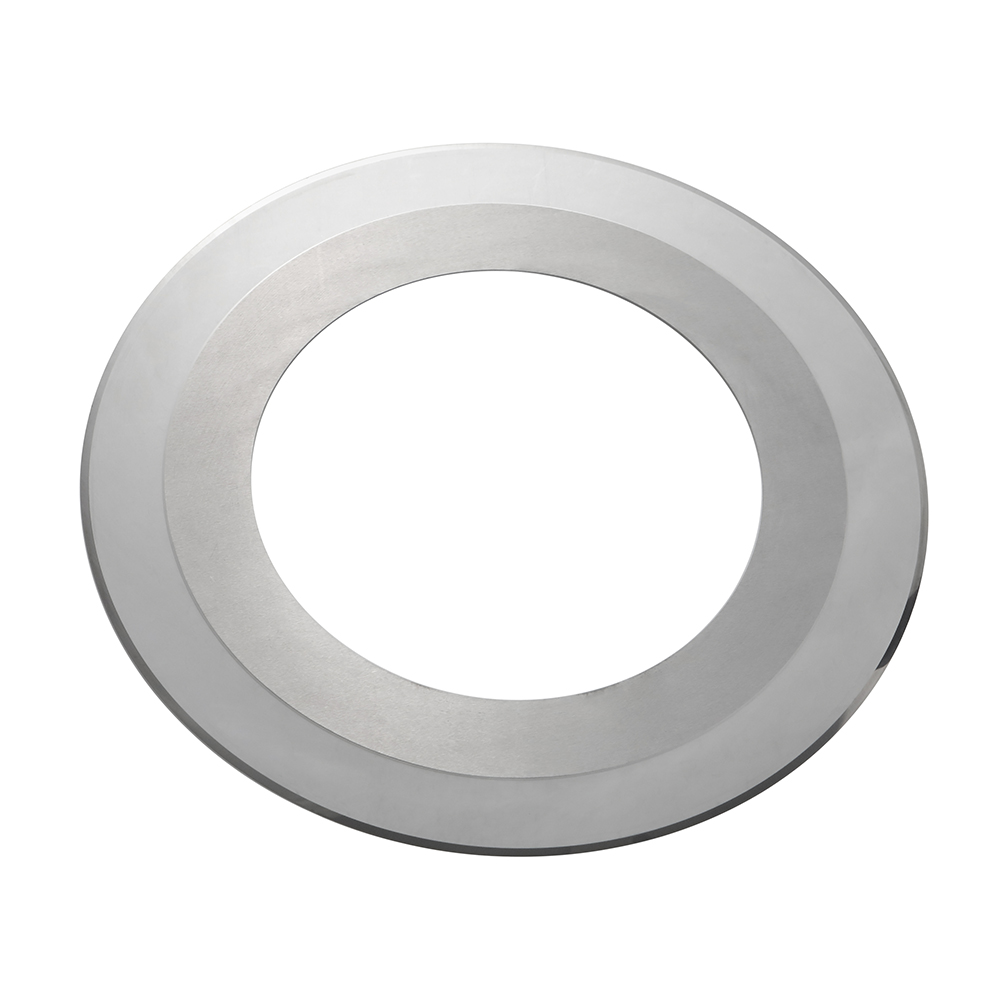
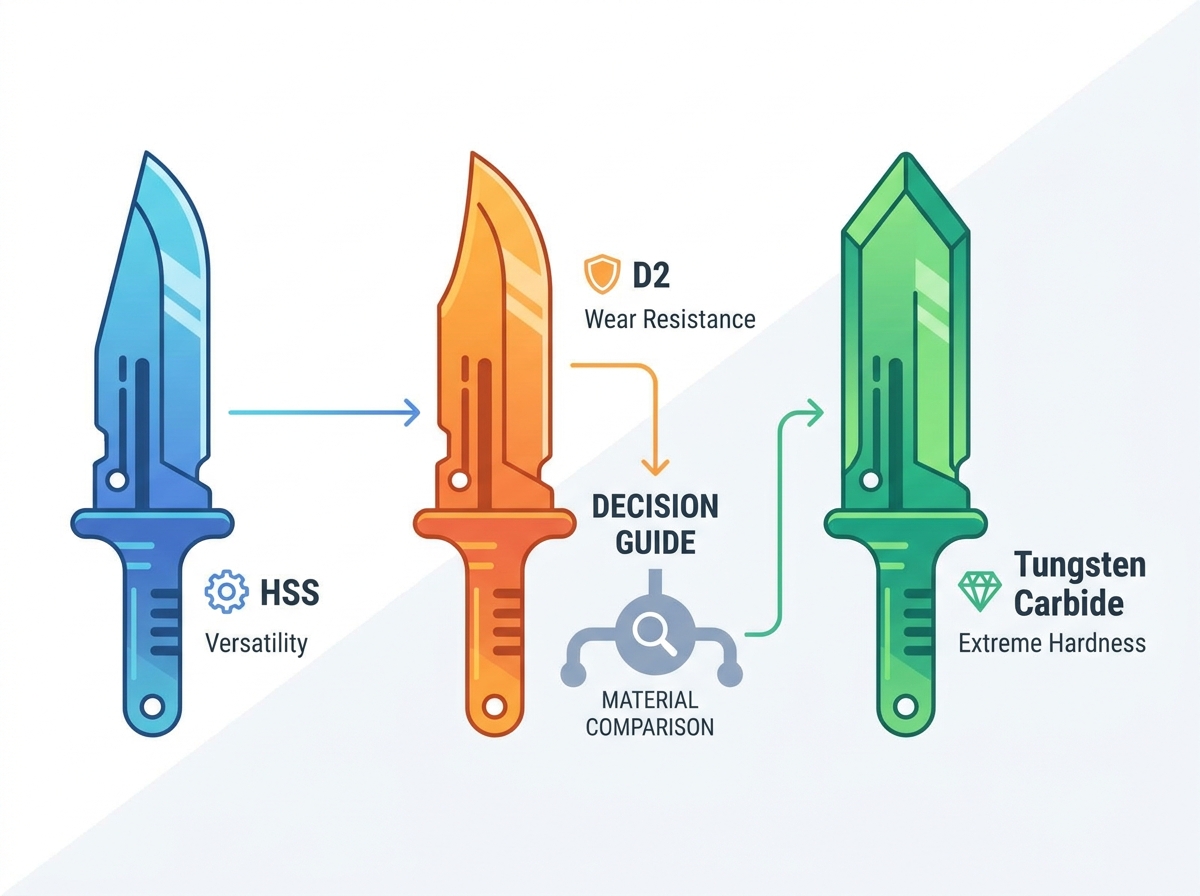
HSS (High-Speed Steel): Delivers superior toughness and a razor-sharp edge, making it the optimal choice for interrupted cuts, general manual turning, and applications prone to shock.
D2 Tool Steel: Acts as a high-carbon, high-chromium middle ground, offering significantly better wear resistance than HSS while maintaining moderate toughness, ideal for industrial shear blades and abrasive materials.
Tungsten Carbide: Provides maximum hardness, thermal stability, and tool life for high-speed, continuous production runs, but requires highly rigid machinery to prevent catastrophic chipping.
The Deciding Factor: The "best" material is dictated not by raw hardness, but by machine rigidity, material being cut, cutting speed parameters, and whether the operation prioritizes edge sharpness or time between tool changes.
Table of Contents
Industrial fabrication demands precise metrics for cutting tools. You cannot rely on guesswork when setting up a four-head moulder or programming a CNC milling center. Tooling engineers evaluate specific performance indicators to determine how a blade behaves under heavy mechanical stress. We must establish a strict baseline to compare different alloys effectively on the shop floor.
Hardness measures a material's ability to resist wear and prevent deformation under heavy loads. We typically measure this using the Rockwell C scale (HRC) for steels. Toughness measures the ability to absorb impact without fracturing. A tough blade bends slightly before breaking. Metallurgy dictates an inverse relationship here. As you increase the hardness of a steel alloy through heat treatment, you inherently decrease its toughness. The material becomes brittle and prone to catastrophic failure under shock.
A highly hard blade shatters when it hits a hard knot in oak or an inclusion in a metal casting. A highly tough blade rolls its edge over when cutting highly abrasive materials like fiberglass. You must identify which mechanical force dominates your daily operation. Interrupted cuts require massive toughness. Continuous cuts in abrasive materials demand extreme hardness. Finding the exact balance prevents premature tool failure and keeps the spindle turning.
Cutting edges degrade rapidly when facing abrasive materials. Medium-Density Fiberboard (MDF) contains dense synthetic glues that eat standard steel edges. Cast iron features a highly abrasive surface crust from the sand casting process. Exotic hardwoods like teak contain natural silica deposits. These elements act like microscopic sandpaper against your blade bevel. They round over the cutting edge quickly, increasing the cutting pressure required to remove material.
Edge retention defines how long a tool cuts effectively before the surface finish degrades. You must establish a baseline for acceptable tool life in your shop. Frequent sharpening stops production and wastes valuable machining time. Pushing a dull blade increases friction and heat. This damages the workpiece, causes severe tear-out, and strains the machine motor. Wear resistance directly dictates your maintenance schedule and overall shop throughput.
Friction generates intense heat at the cutting edge. Thermal stability prevents the blade from softening during heavy material removal. Machinists call this property "red hardness." A blade with high red hardness maintains its structural integrity and edge geometry at elevated temperatures. Heat destroys standard high-carbon steel rapidly. The edge turns blue, loses its temper, and collapses once it reaches critical temperatures.
Surface Feet per Minute (SFM) dictates your material choice. Higher cutting speeds generate exponentially more heat at the shear zone. You must match your blade's thermal stability to your specific SFM requirements. Slow manual feeds on a wood lathe generate minimal heat. Automated CNC routers spinning at 18,000 RPM run at massive speeds. High-speed operations necessitate materials with extreme thermal resistance to prevent immediate edge failure.
To establish a proper baseline for your tooling, follow these evaluation steps:
Calculate the maximum spindle runout on your primary cutting machine using a dial indicator.
Identify the primary abrasive contaminant in your workpiece material.
Record the average surface temperature of your current blades immediately after a heavy cutting pass.
Document the exact number of linear feet cut before the surface finish drops below acceptable quality standards.
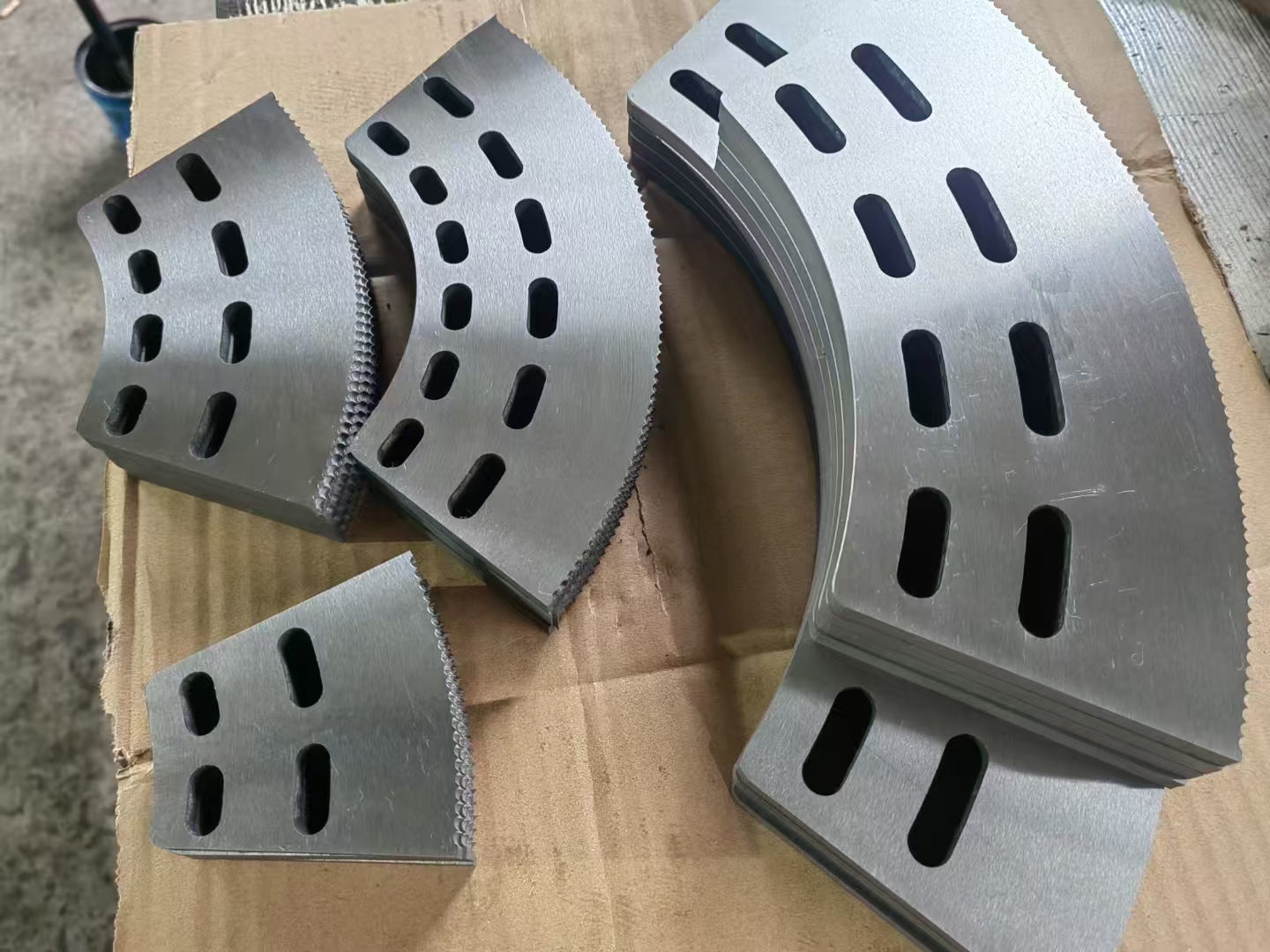
High-Speed Steel represents the traditional standard for cutting tools across multiple industries. It offers massive versatility and reliability. These highly alloyed tool steels prioritize impact resistance while maintaining decent wear characteristics. They accept incredibly fine edge geometry, allowing for aggressive shear angles. HSS remains a dominant force in specific machining sectors where shock absorption is mandatory.
HSS relies on a specific blend of alloying elements to achieve its properties. Tungsten and Molybdenum provide the baseline heat resistance required for power cutting. Chromium increases hardenability during the heat-treating process. Vanadium adds wear resistance by forming hard vanadium carbides within the steel matrix. This combination creates a tough, resilient structure that absorbs heavy mechanical shock exceptionally well.
Manufacturers often add cobalt to create premium grades for heavier machining. M35 grade contains five percent cobalt, while M42 contains eight percent cobalt. Cobalt increases red hardness significantly, allowing the tool to cut at higher temperatures. It bridges the gap between standard HSS and harder, more brittle alloys. HSS takes a finer, sharper edge than any carbide. The fine grain structure allows machinists to grind acute bevel angles down to 25 degrees without the edge crumbling.
HSS excels in general manual woodturning. It dominates standard turning situations where the tool rests on a tool rest and the operator controls the feed. The material handles interrupted cuts flawlessly. It absorbs the massive shock of roughing out square stock into a cylinder. Jointer and planer operations on softwoods benefit heavily from HSS straight knives. The acute edge slices pine and cedar wood fibers cleanly, leaving a glass-smooth finish.
Older machinery often features inherent vibration. Worn spindle bearings and lightweight cast iron frames create runout. HSS forgives these mechanical imperfections. It flexes slightly under vibration instead of shattering. HSS wins when operator feel matters most. It delivers superior shearing cuts on manual lathes and milling machines. You achieve an excellent surface finish on softer materials without needing rigid, heavy-duty machine frames.
HSS dulls rapidly against highly abrasive materials. Cutting MDF or particleboard destroys an HSS edge in minutes due to the glue content. Machining cast iron rounds the bevel quickly. You lose the initial razor sharpness fast when cutting anything with high silica or carbon content. The blade requires frequent maintenance and replacement in these harsh environments.
Solid HSS blades introduce heavy labor requirements. You must physically remove the blades from the cutterhead. You must grind the bevels precisely on a wet grinder to avoid burning the edge. You then spend significant time resetting the blade heights using a dial indicator or setting jig. This frequent maintenance workflow disrupts continuous production runs and limits HSS viability in high-volume manufacturing facilities.
D2 tool steel occupies a unique metallurgical space on the shop floor. It serves as a premium cold-work tool steel. Engineers optimize it for heavy-duty applications where standard steels fail rapidly. It handles high-friction environments effectively while retaining enough structural integrity to survive moderate impacts. D2 bridges the gap between tough HSS and highly brittle carbide.
D2 features massive carbon and chromium levels compared to standard alloys. It contains roughly 1.5 percent carbon and 12 percent chromium. This specific combination forms massive chromium carbides within the steel matrix during heat treatment. These carbides provide extreme wear resistance. They act like microscopic rocks embedded in the steel, taking the brunt of the abrasive wear during the cutting process.
The baseline hardness typically reaches 55 to 62 HRC depending on the temper. This hardness exceeds standard HSS capabilities for wear resistance. The high chromium content provides semi-stainless properties, resisting corrosion better than basic high-carbon steels in humid shop environments. However, the massive carbide structures reduce overall toughness. The grain structure is coarse. It cannot absorb heavy shock like HSS, making it vulnerable to chipping under severe impact.
Industrial shear blades rely heavily on D2 steel for cutting sheet metal. Granulator knives use D2 to chop tough plastics and rubber continuously. Metal stamping dies benefit heavily from its wear resistance during high-cycle runs. Planing highly abrasive woods suits D2 perfectly. It handles teak, mahogany, and hickory without dulling instantly, maintaining a usable edge far longer than standard HSS.
D2 offers superior edge retention in continuous, high-friction environments. It thrives where abrasive wear is the primary failure mode. It works perfectly when carbide proves too brittle for the application but HSS wears out too fast. Heavy shearing operations demand this specific balance of wear resistance and moderate toughness. D2 maintains its geometry through thousands of cutting cycles, providing a reliable middle-ground solution for industrial facilities.
Sharpening D2 presents a significant challenge for standard maintenance departments. The massive chromium carbides resist standard aluminum oxide grinding wheels. The steel glazes over standard abrasives quickly, generating excessive heat that can ruin the temper. You need specialized grinding wheels to maintain D2 edges. Ceramic or CBN (Cubic Boron Nitride) wheels work best for D2 maintenance, requiring an upgrade to your sharpening room equipment.
Micro-chipping remains a constant risk during operation. D2 lacks the shock absorption of HSS. Severe interrupted cuts will fracture the cutting edge. You cannot use D2 for heavy roughing on uneven stock or materials with hard inclusions. The edge will crumble under sudden, heavy impacts. You must ensure consistent feed rates and rigid workholding to protect the blade from chatter and vibration.
Tungsten Carbide represents the absolute pinnacle of cutting tool hardness for standard machining. These are cemented carbides, not traditional steel alloys. Manufacturers engineer them for extreme longevity and heat resistance. They dominate high-speed machining environments and automated production lines. Carbide fundamentally changes how you approach material removal, feed rates, and tool maintenance.
Carbide relies on a complex powder metallurgy process rather than traditional smelting. Microscopic tungsten carbide particles provide the raw hardness. A cobalt binder holds these hard particles together. The manufacturer presses this powder mixture into molds and sinters it at extreme temperatures. The cobalt ratio determines the final mechanical properties. More cobalt increases toughness slightly for interrupted cuts. Less cobalt maximizes raw hardness for continuous finishing passes.
Thermal stability remains unmatched by any steel. Carbide ignores heat that would instantly melt HSS. This allows for massive cutting speeds and aggressive chip loads. You can push feed rates to extreme limits on CNC equipment. The material does not soften under heavy friction. However, it cannot take the acute, razor-thin edge of HSS. The granular structure prevents ultra-fine bevels, requiring a blunter edge geometry to prevent the edge from crumbling under cutting pressure.
CNC machining relies almost entirely on carbide tooling. High-volume production demands its longevity to keep machines running without interruption. Cutting MDF, melamine, and plywood requires carbide edges to survive the abrasive glues. Machining non-ferrous metals like aluminum, brass, and copper suits carbide perfectly, preventing built-up edge issues. Specialized woodworking tasks, like hollowing deep vessels, benefit from carbide scrapers that never need traditional sharpening.
The manufacturing industry heavily favors carbide insert tooling over solid knives. Indexable cutters bypass sharpening logistics entirely. When an edge dulls, you simply loosen a set screw and rotate the insert to a fresh, factory-sharp edge. This eliminates grinding downtime and setup errors. It guarantees consistent cutting diameters for precise joinery. Carbide maximizes machine uptime in continuous manufacturing environments where labor costs exceed tooling costs.
Extreme brittleness defines carbide's primary operational limitation. The material shatters under shock. Heavy vibration from worn bearings destroys the cutting edge instantly. Dropping a carbide insert on a concrete shop floor will chip it beyond repair. Improper handling during installation, such as over-torquing the mounting screws, leads to immediate stress fractures and failure during the first cut.
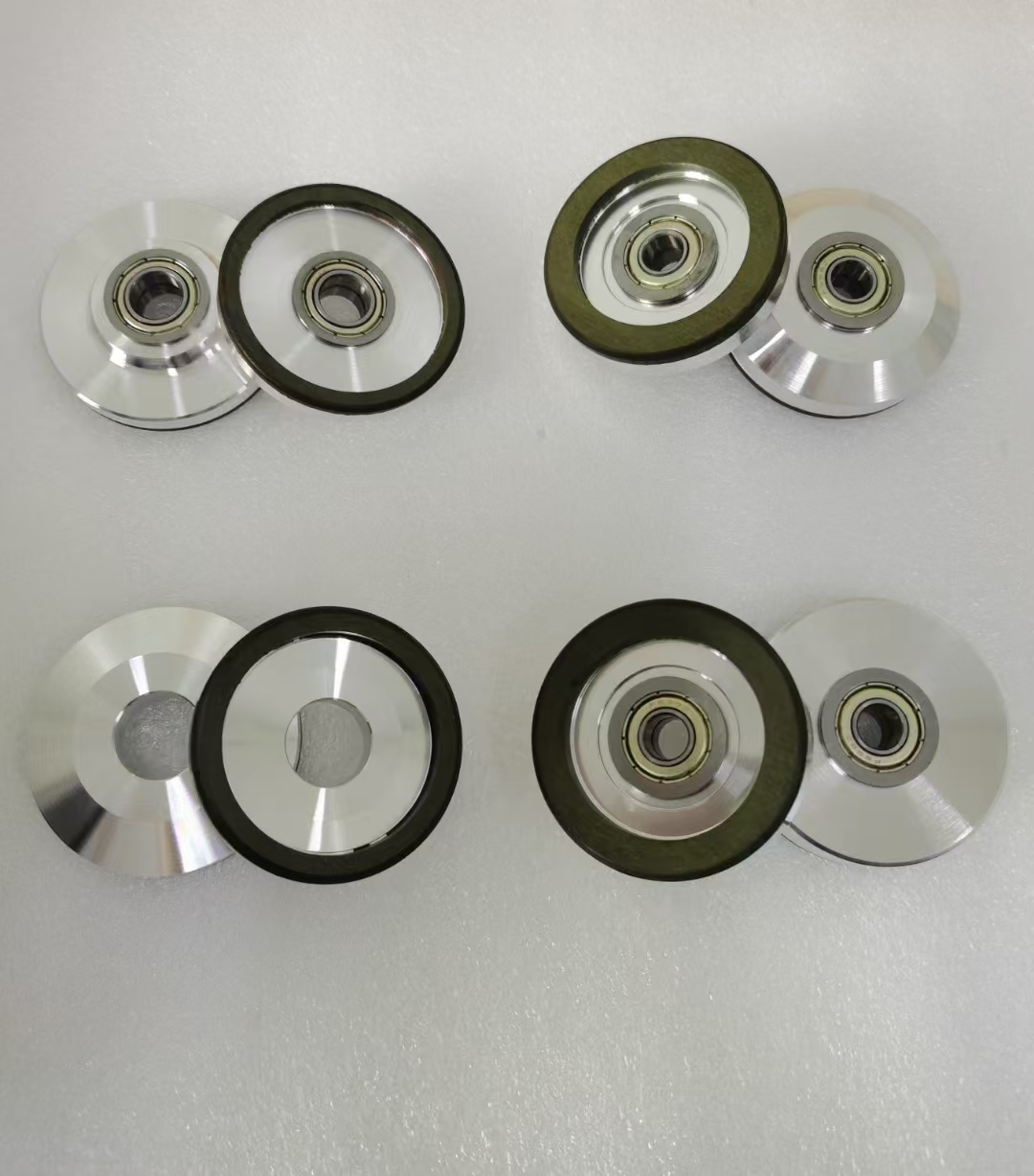
Sharpening custom carbide profiles requires strict, highly rigid setups. You must use specialized diamond grinding wheels. Standard abrasives will not even scratch carbide. The tool and cutter grinder fixtures must remain perfectly rigid. Any deflection during grinding causes micro-fractures in the carbide matrix. Most shops abandon sharpening entirely and adopt disposable insert systems to avoid the massive capital investment required for diamond grinding equipment.
You must evaluate these materials across critical operational metrics to make an informed decision. When settling the HSS vs D2 vs tungsten carbide blades debate on the shop floor, you have to look at how they perform under actual cutting loads. Each material dominates specific environments. Comparing them directly reveals their true operational value for your specific machinery.
Operational Metrics Comparison
Property | High-Speed Steel (HSS) | D2 Tool Steel | Tungsten Carbide |
|---|---|---|---|
Hardness (Wear Resistance) | Moderate | High | Maximum |
Toughness (Impact Resistance) | Maximum | Moderate | Low (Brittle) |
Thermal Stability (Red Hardness) | Moderate | Moderate to High | Extreme |
Edge Sharpness Potential | Razor Sharp (Acute) | Very Sharp | Sharp (Blunter Bevel) |
Ideal Machine Environment | Manual / Older Machines | Heavy Industrial Shears | Rigid CNC / Automated |
Material compatibility dictates your initial tooling choice. HSS dominates soft and non-abrasive materials. It delivers the finest surface finish on pine, maple, and cherry. The acute edge slices the wood fibers cleanly, minimizing the need for sanding. D2 steps in for abrasive or medium-hard industrial shearing. It handles tough plastics, rubber, and abrasive woods effectively without losing its edge in the first ten minutes of operation.
Carbide takes over for extreme hard materials and composites. It cuts highly abrasive fiberglass and carbon fiber easily. Non-ferrous metals require carbide's heat resistance to prevent the material from welding to the cutter. Carbide pushes through synthetic glues and resins without degrading. You must match the blade's wear resistance to the workpiece's abrasiveness to maintain a profitable cutting operation.
Traditional milling and planing setups use solid HSS straight knives. These knives span the entire width of the cutterhead. They produce a clean cut on straight-grained wood when properly set. However, they cause massive tear-out on figured grain because they lift the wood fibers simultaneously across the board. Helical cutterheads utilize Tungsten Carbide inserts arranged in a spiral pattern. These inserts hit the wood at a shear angle, slicing rather than chopping.
Helical heads reduce machine noise significantly. The sequential cutting action lowers decibel levels on the shop floor. Maintenance changes drastically with this setup. If you hit a hidden nail with a solid HSS blade, it requires complete removal and regrinding of all knives to maintain balance. With a helical head, you simply rotate the specific chipped carbide insert. This localized repair saves massive amounts of setup time and keeps the machine running.
Maintenance workflows define shop efficiency and labor allocation. HSS requires frequent, easy sharpening. You can maintain HSS on standard aluminum oxide wheels found in any basic shop. The process is fast but highly repetitive. D2 presents a difficult sharpening workflow. You need specific ceramic abrasives, careful heat management, and frequent wheel dressing to prevent glazing the abrasive surface.
Tungsten Carbide shifts the maintenance model entirely. You adopt a strict "replace and rotate" workflow. You do not sharpen standard carbide inserts in-house. You run them until dull, rotate them to the next sharp edge, and eventually discard them into a recycling bin. This scales perfectly for high-volume shops. It eliminates the need for an in-house sharpening station and removes the variable of human error during the grinding process.
Theoretical performance means nothing without proper mechanical implementation. Environmental factors dictate success or failure on the shop floor. Mechanical realities often override metallurgical advantages. You must prepare your machinery and your operators for the specific blade material you choose to deploy.
Upgrading to Tungsten Carbide carries significant mechanical risks if your equipment is not prepared. Older machinery often lacks the necessary cast iron mass. Lightweight steel frames flex under heavy cutting pressure. Worn spindle bearings introduce microscopic runout. This vibration transfers directly from the spindle to the cutting edge.
Carbide cannot absorb this vibration. The brittle edge will micro-chip rapidly, leaving lines in your workpiece. Sometimes, the entire blade shatters, sending shrapnel into the dust collection system. You must audit your machine's rigidity before installing carbide tooling. Mount a dial indicator to the machine table and measure spindle runout. If your machine vibrates heavily or shows significant deflection, stick to forgiving HSS blades.
Manual feed rates remain inherently variable. Human operators cannot push material across a jointer or router table at a perfectly constant speed. They slow down through dense knots. They speed up on clear, straight grain. This variable chip load favors HSS. The tough steel forgives inconsistent pressure and sudden changes in cutting force.
Consistent, automated feed rates maximize Carbide and D2 lifespans. CNC machines maintain exact chip loads based on programmed parameters. Power feeders push material flawlessly across shaper tables. These automated systems prevent sudden shocks to the cutting edge. You must match your feeding method to the blade's brittleness. Never use carbide for heavy, unpredictable manual roughing operations.
There is no universal material that solves every cutting application. You must evaluate your specific shop conditions, machine capabilities, and material requirements to make the correct choice.Navigating these metallurgical options requires relying on trusted engineering expertise. As an industry leader in high-performance industrial cutting solutions, Hangjin combines advanced manufacturing standards with decades of technical experience to help workshops optimize tool life and maximize production efficiency.
Audit your current machine's rigidity using a dial indicator to check for spindle runout before upgrading to harder alloys.
Track your monthly downtime spent specifically on blade changes and sharpening routines to identify maintenance bottlenecks.
Match your feed rate mechanism to your blade choice, installing power feeders when transitioning to brittle carbide tooling.
Consult with a tooling engineer to run a controlled pilot test on a specific blade alloy before outfitting the entire shop.
A: No. Tungsten Carbide requires extreme machine rigidity. Older or lightweight machines often suffer from spindle runout and vibration. Carbide is highly brittle and cannot absorb shock. Using carbide on machines with high vibration will cause the blades to micro-chip or shatter entirely. Stick to HSS for vibrating machinery.
A: It depends on the wood. D2 holds an edge significantly longer when cutting highly abrasive woods or materials with high silica content. However, HSS takes a sharper initial edge. HSS is also much easier to sharpen in a standard shop setup. Use HSS for fine finishing on softwoods and D2 for abrasive hardwoods.
A: Tungsten Carbide is highly effective for non-ferrous metals. Aluminum and brass can be abrasive and generate significant heat at high speeds. Carbide's extreme thermal stability and wear resistance handle these materials easily. It maintains its cutting edge far longer than HSS in these specific metalworking applications.
A: Tungsten Carbide relies on complex powder metallurgy. Manufacturers must blend microscopic tungsten carbide particles with a cobalt binder. They press this powder under massive pressure and sinter it at extreme temperatures. This precise, energy-intensive process creates a matrix that delivers unmatched hardness and thermal stability for industrial machining.
A: Standard aluminum oxide wheels will not work on carbide. The material is simply too hard. You must use specialized diamond grinding wheels. You also need precise, rigid fixtures to hold the blade. Any vibration during grinding causes micro-fractures. Most shops prefer indexable carbide inserts to avoid sharpening entirely.


