
T: +86-186-8927-7942
E: kemp@hangjin-machinery.com
E: kemp@hangjin-machinery.com
No. 107 Changning Road, Tongjing Town, Jiangning District, Nanjing, Jiangsu, China
Views: 0 Author: Site Editor Publish Time: 2026-08-13 Origin: Site


Sub-optimal cutting tools cause micro-stoppages, yield loss, and accelerated machine wear. Plant managers often overlook these issues until they severely impact production quotas. You must navigate blade geometries, metallurgical properties, and application-specific requirements to prevent premature edge failure and material deformation. We will establish a clear framework for evaluating and specifying industrial machine blades. Matching the exact blade material and edge profile to your specific substrate reduces scrap rates and extends the runtime between maintenance intervals. This technical guide breaks down the core variables of blade selection so you can eliminate cutting bottlenecks and maximize operational efficiency on the shop floor.
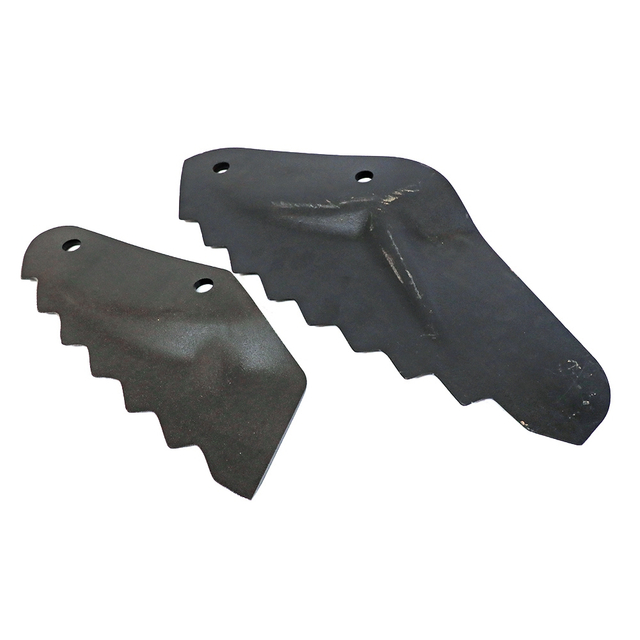
Material dictates performance: Successful specification requires balancing metallurgical hardness (wear resistance) with toughness (shock resistance) based on the substrate.
Geometry matches application: Edge profiles and bevel configurations must be engineered specifically for the material being processed to minimize dust generation and edge rolling.
Custom engineering mitigates risk: For high-volume or abrasive converting applications, purpose-built blades utilizing advanced precision techniques often outperform standard off-the-shelf replacements.
Table of Contents
Cutting operations define the final quality of manufactured goods. You must maintain strict dimensional accuracy. Clean edge quality meets downstream processing requirements. A jagged or rolled edge often causes automated packaging machinery to jam, leading to immediate production halts. Precision cutting mechanics directly correlate to material yield optimization. When you control the web tension and ensure the blade penetrates without dragging, you eliminate the micro-tears that compromise the structural integrity of the final product.
Uptime maximization relies heavily on blade durability. Frequent changeovers destroy production schedules. Every minute spent locking out a machine to swap a dull blade equals lost manufacturing time. You must quantify the operational impact of changeover frequency. Extending run times between blade replacements drastically improves overall equipment effectiveness. Upgrading to a blade material that holds its edge for three shifts instead of one fundamentally changes the output capacity of that machine line.
Scrap reduction serves as a primary metric for cutting success. Dull edges stretch materials before severing them. This stretching causes dimensional distortion, rendering the materials unusable. Sharp, properly specified edges shear materials cleanly. This minimizes waste and maximizes the yield from every raw material roll or sheet. In high-speed web converting, even a fraction of an inch of edge trim waste adds up to massive material losses over a fiscal quarter.
Industrial cutting operations generally fall into four primary actions: trimming, scoring, slitting, and perforating. Selecting the correct blade geometry is critical for each specific action. Using the wrong profile guarantees poor cut quality and rapid tool degradation.
Circular knives dominate continuous web processing. They operate through three primary mechanisms. Shear slitting uses two rotating blades acting like scissors. The top blade (male) intersects with the bottom blade (female) at a specific cant angle, usually between 0.5 and 1.5 degrees. Crush cut, or score slitting, presses a radiused blade against a hardened anvil cylinder. Razor slitting pulls the material across a stationary or freely rotating blade, relying entirely on the sharpness of the edge rather than shearing force.
These blades excel in converting operations. They trim and slit paper, plastic film, polyester, foil, and textiles. High-speed rotation demands strict run-out tolerances. Concentricity requirements are non-negotiable. Even a 0.0005-inch wobble causes web tearing and generates excessive dust during paper converting. Engineers must specify precise inner diameter tolerances to ensure perfect shaft alignment and prevent vibration at high RPMs.
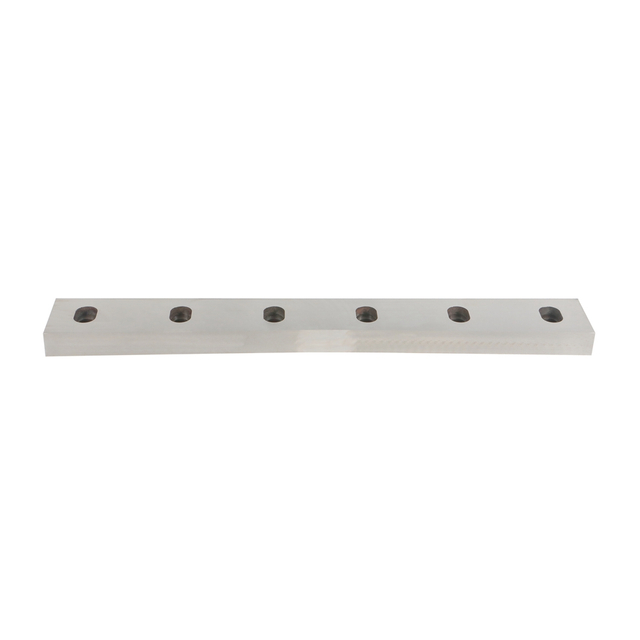
Straight blades deliver high-impact shearing force. Configurations vary based on penetration requirements. Single bevel designs push material to one side, ideal for trimming edges. Double bevel designs part the material evenly, preventing distortion on both sides of the cut. Compound bevels feature a primary and secondary angle. This reinforces the cutting edge against heavy impacts, providing a sharp entry point backed by a thicker wedge of steel.
Guillotine knives operate in hydraulic and stationary presses. They shear metals, thick plastics, rubber, and dense composites. Structural rigidity is the primary evaluation dimension. The blade must resist deflection under high-tonnage loads. Any bowing during the cut causes uneven edges and can lead to catastrophic blade fracture. Thickness and mounting hole placement must distribute force evenly across the tool. You must also maintain tight gib clearances on the machine to prevent the blade from rolling over during the shear cycle.
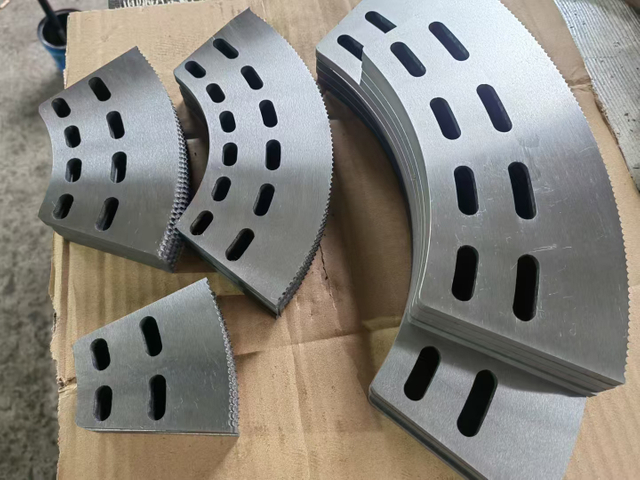
Toothed blades handle materials requiring specific tear-strengths. The engineering behind pitch, tooth profile, and gullet design is highly specialized. Pitch determines the distance between teeth, dictating the force required to tear the final product. The gullet clears material away from the cutting zone, preventing the blade from binding in thick substrates.
Packaging lines heavily utilize perforating blades. They create tear-off consumer products and handle specialized textile manufacturing. You must balance tooth sharpness with durability. Overly sharp, thin teeth snap off easily under lateral loads. Dull teeth fail to penetrate and cause the material to bunch up behind the blade. Proper tooth geometry prevents clogging and ensures consistent perforation depth across the entire web width, regardless of machine speed.
Many applications require bespoke edge profiles. Tray sealers use custom-shaped blades to cut plastic film around food containers, requiring exact dimensional matching to the tray dies. Pelletizer knives chop extruded plastic strands into uniform pellets, demanding extreme wear resistance to handle abrasive polymers. Granulator blades shred scrap material for recycling, requiring massive shock resistance to survive impacts with dense plastic chunks. Contour-cutting tools follow complex CNC paths to shape foam or composites.
Highly specific OEM equipment often requires non-standard substrates. Standard straight or circular blades cannot accommodate these unique cutting paths. Custom geometries solve persistent manufacturing challenges. They match the exact curvature and penetration angle required by specialized machinery, ensuring clean cuts in restricted operational envelopes.
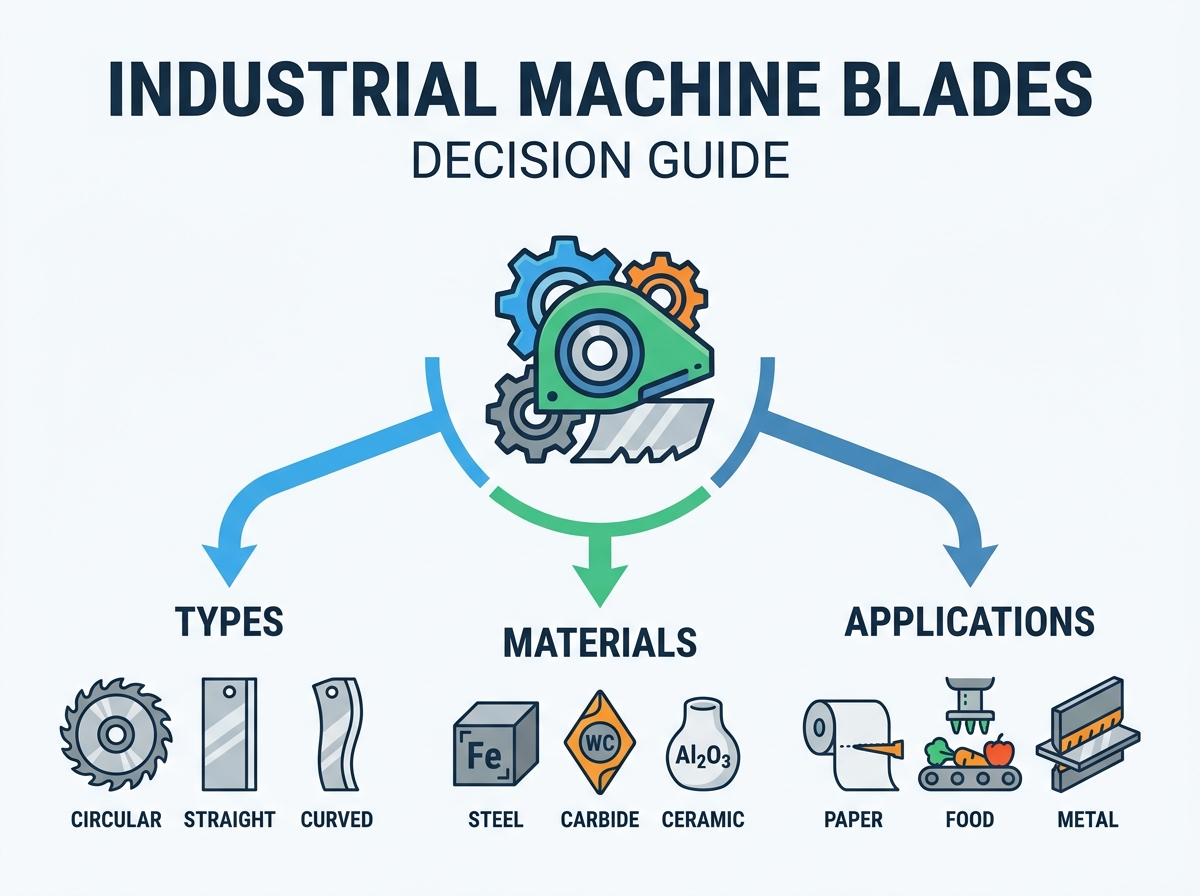
The base material of the blade dictates its operational limits. You must match the metallurgy to the substrate being cut. A mismatch leads to rapid wear, edge rolling, or catastrophic failure.
Carbon steel provides a functional baseline for wear resistance. It takes a sharp edge easily but rusts rapidly in humid environments. Stainless steel, specifically 300 and 400 series, offers high corrosion resistance. The 400 series, particularly 440C, can be heat-treated to achieve functional hardness levels around 56-58 HRC.
These materials fit best in food processing and medical manufacturing. They thrive in environments requiring strict sanitation compliance. Harsh chemical washdown procedures will not degrade stainless steel. The main limitation is rapid edge degradation. They fail quickly in high-friction or highly abrasive industrial environments. You will need frequent resharpening when cutting dense materials, making them unsuitable for heavy industrial converting.
Tool steels dominate the industrial cutting sector. They offer superior wear resistance and edge retention due to high carbon and alloy content. D2 steel contains high chromium, offering excellent wear resistance for abrasive materials. M2 high-speed steel maintains its hardness at elevated temperatures, preventing edge softening during high-friction slitting. Chrome-vanadium specifically offers exceptional fatigue resistance under continuous stress.
These alloys fit general converting, packaging, and metal shearing. They handle applications subject to high shock-loading. You must carefully trade off hardness against brittleness. Pushing D2 to 62 HRC increases wear life significantly but raises the risk of chipping under impact. Heat treatment protocols must temper the steel properly. This achieves the perfect balance of toughness and edge retention for the specific cutting application.
Tungsten carbide delivers extreme longevity. It features sub-micron grain structures bound by a metallic binder, usually cobalt. It can outlast standard tool steels by up to ten times in specific applications. Advanced ceramics offer similar wear resistance with zero metallic contamination, making them ideal for specialized medical or electronic component manufacturing.
These materials fit high-volume, highly abrasive applications. They excel at cutting fiberglass, heavily filled plastics, and corrugated cardboard. The trade-offs include extreme susceptibility to catastrophic failure. Lateral shock or improper handling will shatter a carbide blade instantly. Machine alignment must be flawless, and bearing run-out must be virtually zero to utilize these advanced materials successfully.
Coatings alter the surface properties of the blade without changing the base metallurgy. They reduce the coefficient of friction and prevent material adhesion during the cut. PTFE (Teflon) coatings stop adhesive tapes and hot rubber from sticking to the blade bevel, preventing material buildup that ruins cut quality.
Titanium Nitride (TiN) adds a micro-thin layer of extreme hardness via Physical Vapor Deposition (PVD). This extends wear life and improves cut quality by protecting the base substrate material from abrasive wear. Coatings provide significant value in high-speed operations. They prevent heat buildup caused by friction, keeping sensitive materials from melting along the cut line and galling onto the blade.
Blade Material Comparison Matrix
Material Grade | Primary Advantage | Ideal Application | Limitation |
|---|---|---|---|
400 Series Stainless | Corrosion resistance | Food processing, medical | Lower wear resistance |
D2 Tool Steel | High wear resistance | Paper converting, plastics | Prone to chipping if too hard |
M2 High-Speed Steel | Heat resistance | High-friction slitting | Requires precise heat treatment |
Tungsten Carbide | Extreme longevity | Abrasives, fiberglass | Brittle, sensitive to lateral shock |
Every industry presents unique cutting challenges. A blade that excels in a paper mill will fail in a metal stamping plant. Understanding substrate behavior under shear stress is the key to successful blade specification.
Paper products are deceptively abrasive. They contain calcium carbonate, clay coatings, and recycled particulates. These elements act like microscopic sandpaper, grinding away cutting edges rapidly. The outcome focus here is managing abrasive dust and preventing edge crushing during the cut. Maintaining clean cuts over long runs requires high wear resistance. D2 tool steel or Tungsten Carbide circular knives are standard in these environments. The bevel angle must be acute enough to slice cleanly but robust enough to withstand continuous abrasion without rolling over.
Synthetic materials react poorly to heat. High-speed slitting generates significant friction, pushing plastics past their glass transition temperature. The outcome focus is preventing heat buildup, edge melting, and web stretching. Slitting sensitive materials like polyester and adhesive tapes requires razor-sharp edges and polished surface finishes to reduce drag. PTFE coatings are often mandatory when processing exposed adhesives. Razor slitting with micro-grain solid carbide blades provides the best results for ultra-thin films, ensuring the material parts cleanly without stretching.
Shearing metal requires massive force. The outcome focus prioritizes impact resistance, preventing micro-fractures in the blade structure, and maintaining structural integrity under extreme force. Shock-resistant tool steels like S7 or modified A2 are preferred. The bevel angles are blunt, often approaching 90 degrees. This maximizes the amount of steel supporting the cutting edge. Hardness is kept slightly lower, usually around 54-56 HRC, to ensure the blade absorbs shock without shattering during the initial impact with the metal sheet.
These materials compress and shift during the cut. The outcome focus is managing material elasticity, preventing fraying in woven fibers, and maintaining razor-sharp edge profiles to penetrate dense substrates. If the blade is dull, rubber will deform rather than cut, resulting in concave edges. Scalloped or wavy edge blades often work best for textiles because they grip the fibers and sever them cleanly. Advanced composites like Kevlar require specialized micro-serrations to prevent the tough aramid fibers from slipping away from the edge during the shear cycle.
Sanitation drives every decision in these sectors. The outcome focus is FDA and USDA compliance, washdown durability, and eliminating contamination risks from flaking coatings or rust. 440C stainless steel is widely used because it offers the best compromise between edge retention and corrosion resistance. Blades must feature highly polished surfaces to prevent bacterial adhesion. Crevice-free mounting designs are required to ensure thorough cleaning during sanitation shifts, preventing organic material from hiding in the blade holder.
Purchasing based solely on the lowest initial price guarantees operational inefficiency. You must evaluate the true performance value of the cutting tool. This requires a comprehensive look at how the blade impacts daily production metrics and machine uptime.
Premium materials carry higher upfront investments. However, they drastically alter the operational lifespan of the tool. A Tungsten Carbide blade requires a larger initial budget than a standard carbon steel blade. Yet, it can run ten times longer before requiring replacement. You must justify the higher upfront investment through reduced downtime. Fewer maintenance cycles mean more hours of active production. Calculate the hourly rate of machine downtime and multiply that by the number of blade changes required per month. The operational savings from extended lifespans quickly offset premium material investments.
Standard OEM replacements work well for general applications. However, persistent cutting failures demand a different approach. You must know when to rely on standard parts versus investing in custom solutions. If you experience frequent edge rolling or excessive dust generation, standard blades are failing you. Reverse-engineered, custom blades resolve these issues. Tooling engineers can tweak the bevel angle by a few degrees, upgrade the alloy, or apply a specialized coating. This shortlisting logic ensures you only deploy custom engineering when the application truly demands it.
The manufacturing process of the blade is just as important as the material itself. Vendor evaluation is a critical step. You must verify their precision CNC grinding techniques. Inconsistent grinding introduces heat stress, ruining the blade's temper and causing premature failure. Advanced heat and cryogenic treatment processes are mandatory for high-performance steels. Cryogenic freezing stabilizes the molecular structure, increasing wear resistance. You must also demand raw material lot traceability. This ensures you receive authentic, high-grade alloys rather than inferior substitutes. Partnering with a reliable vendor for industrial machine blades guarantees consistent quality across production batches.
Even the best blades fail if implemented incorrectly. You must proactively manage installation and maintenance risks. Ignoring these factors leads to sudden tool failure, damaged machinery, and ruined product runs.
Edge failure rarely happens without a specific mechanical cause. Root causes include an incorrect bevel angle for the substrate, mismatched material hardness, or machine misalignment causing lateral stress. If the top and bottom slitters clash due to improper setup, the edges will chip immediately.
Mitigation requires strict protocols. Conduct thorough substrate testing before ordering blades in bulk. Perform operational audits on the cutting machinery. Ensure precise machine calibration prior to installation. Check bearing run-out, shaft alignment, and gib clearances. A perfectly engineered blade will still chip if the machine vibrates excessively or if the operator sets the overspeed ratio incorrectly during operation.
Blades require careful handling throughout their lifecycle. Operational risks include poor handling leading to micro-chips. Dropping a carbide blade on a concrete floor or resting it against another steel tool destroys the edge instantly. Improper grinding alters the blade's temper. Grinding without sufficient flood coolant burns the steel, ruining its hardness and causing surface cracking.
Mitigation involves establishing safe handling procedures. Use custom wooden or plastic cases for transport and storage. Define optimal resharpening intervals based on cut quality degradation, not just time in service. Determine the threshold for when a blade is beyond economical repair. Over-sharpening changes the blade's outer diameter, eventually rendering it incompatible with the machine's anvil or mating knife.
Selecting the right cutting tools is a critical engineering decision that directly impacts production efficiency and product quality. As an industry-leading manufacturer backed by decades of precision engineering and advanced metallurgical expertise, Hangjin specializes in delivering custom-engineered industrial blades designed to meet the rigorous demands of modern high-speed production lines.Base your final decisions on a strict matrix evaluating the cut type, substrate abrasiveness, and necessary environmental factors. Follow these actionable steps to improve your cutting operations:
Initiate a comprehensive cutting application audit to identify current bottlenecks and scrap rates.
Document the exact failure modes of your current blades, noting whether they suffer from abrasive wear, chipping, or edge rolling.
Request prototype testing for custom alloys or specialized coatings before committing to a large-scale tooling change.
Establish standardized handling and resharpening protocols to protect your tooling investments from accidental damage.
Consult directly with a specialized tooling engineer to match exact bevel geometries to your specific substrate materials.
A: There is no single best material. The optimal choice depends entirely on the application. D2 tool steel is excellent for general wear resistance. Tungsten carbide is best for highly abrasive materials like fiberglass. 400 series stainless steel is required for food processing where corrosion resistance is mandatory.
A: Replacement intervals depend on material abrasiveness, machine speed, and blade metallurgy. Do not use a fixed time schedule. Replace or resharpen blades when cut quality degrades, dust generation increases, or the machine motor draws higher amperage due to increased cutting resistance.
A: Shear slitting uses two rotating blades overlapping like scissors to slice the material. Crush cutting uses a single relatively blunt blade pressing down against a hardened steel anvil roll to sever the material through pressure. Shear slitting offers cleaner edges for films, while crush cutting handles thicker, dust-prone materials.
A: Yes. PTFE (Teflon) coatings significantly reduce the coefficient of friction. This prevents exposed adhesives, hot plastics, and rubber from sticking to the blade. By preventing material buildup, the blade cuts cleaner, generates less heat, and maintains its sharp edge for a longer duration.
A: Chipping is usually caused by lateral shock or excessive hardness. Prevent it by ensuring perfect machine alignment to eliminate side-loading. Choose a blade material with higher shock resistance (toughness) rather than maximum hardness. Also, verify that the bevel angle is robust enough for the material being cut.
A: Visual signs include jagged or melted edges on the cut material. You will also see increased dust generation in paper converting. Machine indicators include louder cutting noises, increased vibration, and higher motor load. The blade itself may show visible micro-chips, rolled edges, or burnt discoloration.


