
T: +86-186-8927-7942
E: kemp@hangjin-machinery.com
E: kemp@hangjin-machinery.com
No. 107 Changning Road, Tongjing Town, Jiangning District, Nanjing, Jiangsu, China
Views: 0 Author: Site Editor Publish Time: 2026-04-07 Origin: Site


Ever notice cuts getting rough or uneven? It often means blades are dull. Circular Saw Blade Sharpeners solve this problem.
In this article, you will learn how they work and why they matter. You will also understand how they improve performance, reduce costs, and support better cutting results.
A Circular Saw Blade Sharpener is a specialized machine designed to restore the cutting performance of circular blades. It works by regrinding the worn edges of each tooth, bringing them back to their original shape and sharpness. Over time, even high-quality blades lose efficiency, so regular sharpening becomes essential to maintain consistent results.
Key Functions of Circular Saw Blade Sharpeners
Maintain uniform tooth height and spacing
Restore rake and clearance angles
Remove micro-damage caused by friction and heat
Improve cutting stability across different materials
When you think about it, the sharpener is not just a tool. It becomes part of the blade system itself. It keeps performance stable over time, especially in high-precision slitting or industrial cutting.
Sharp blades directly affect how materials are processed. When a blade loses its edge, cutting becomes rough and inefficient. You may notice uneven edges, burning marks, or increased resistance during operation. These problems often start small, but they quickly impact production quality.
In real working conditions, dull blades create multiple issues:
They require more force to cut through materials
They increase friction, which generates excess heat
They reduce cutting accuracy, especially in thin or delicate materials
This also affects machinery. When blades are dull, motors must work harder to maintain speed. Over time, this leads to overheating, higher energy consumption, and faster wear of machine components.
| Blade Condition | Cutting Result | Machine Impact | Safety Risk Level |
|---|---|---|---|
| Sharp Blade | Clean, smooth cuts | Stable operation | Low |
| Slightly Dull | Minor rough edges | Increased load | Medium |
| Very Dull | Burn marks, uneven cuts | Overheating, heavy strain | High |
Another important factor is safety. A dull blade is more likely to bind or slip during cutting. This increases the risk of kickback or sudden tool movement. In industrial environments, even small risks can lead to serious accidents.
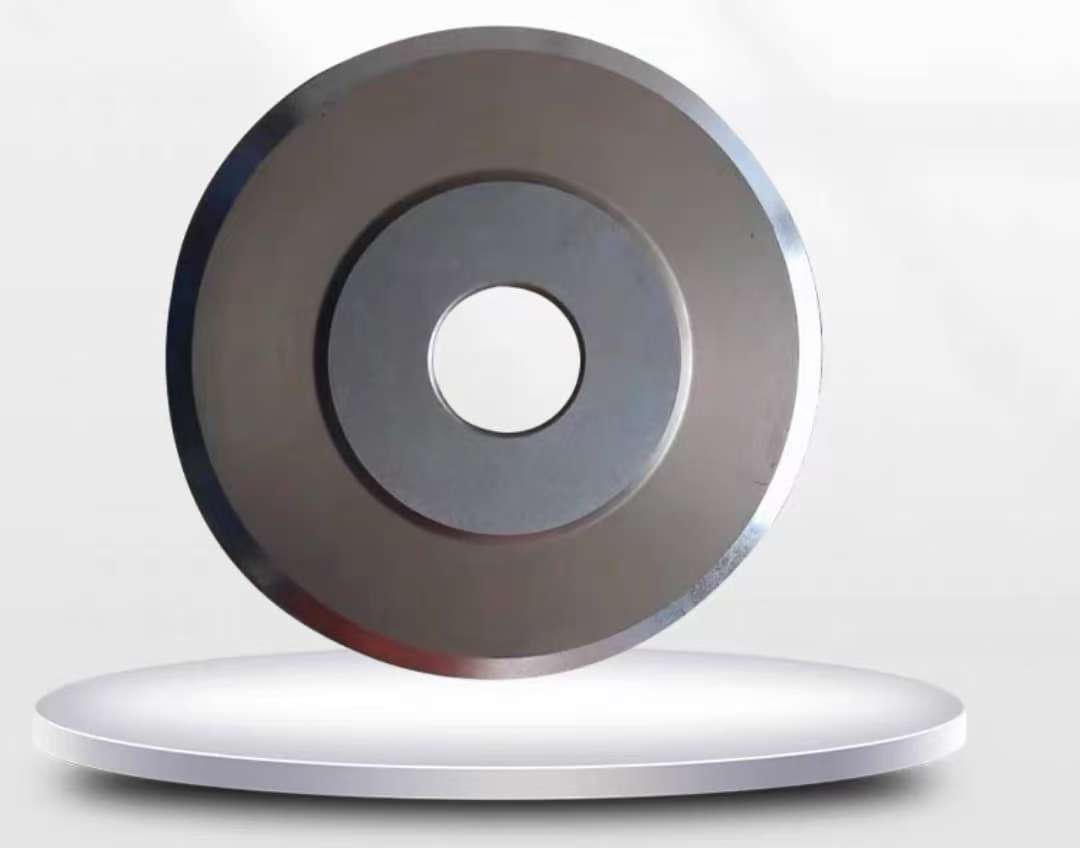
Circular Saw Blade Sharpeners operate through a controlled grinding process. A high-speed rotating grinding wheel contacts each tooth and removes a thin layer of worn material. It sounds simple, but the precision behind it is critical. The machine must keep consistent pressure, angle, and depth during every pass, or the blade performance will drop.
When the grinding wheel spins at high speed, it creates friction against the tooth edge. This friction removes micro-damage caused by cutting, such as rounding or chipping. At the same time, it reshapes the tooth profile, bringing it back to its original design.
Inside every Circular Saw Blade Sharpener, there are several core systems working together. Each one plays a specific role, and they must stay perfectly coordinated. If one part loses accuracy, the entire sharpening result becomes unreliable.
The most important components include:
Grinding wheel system → usually diamond or abrasive wheels, designed for different materials
Positioning and clamping device → holds the blade firmly, prevents movement during grinding
Control system (manual or CNC) → adjusts angles, speed, and grinding depth
These systems do not work independently. They interact continuously during operation. For example, when the blade moves to the next tooth, the control system recalculates the position and angle automatically.
| Component | Function Description | Impact on Sharpening Quality |
|---|---|---|
| Grinding Wheel | Performs cutting and reshaping of teeth | Determines sharpness and surface finish |
| Clamping Device | Secures blade in fixed position | Ensures stability and repeat accuracy |
| Positioning System | Aligns each tooth precisely | Prevents uneven tooth height |
| CNC/Control System | Controls angles and movement | Guarantees consistent geometry |
For high-end applications, modern machines often include automatic adjustment features. This helps maintain precision when sharpening different blade types, including tungsten carbide or high-speed steel blades commonly used in Hangjin products.
Tooth geometry is the core reason sharpening works. Every circular blade is designed with specific angles and spacing. These include rake angle, clearance angle, and tooth pitch. If these parameters change, cutting performance changes immediately.
When sharpening is done correctly, it restores these angles. When it is done poorly, it destroys them. That is why Circular Saw Blade Sharpeners must be adjusted carefully before operation.
If any of these are incorrect, problems appear quickly. You may see rough edges, increased resistance, or unstable cutting behavior.
| Geometry Element | Function in Cutting | Effect if Incorrect |
|---|---|---|
| Rake Angle | Controls cutting speed and feed rate | Too aggressive or too slow cutting |
| Clearance Angle | Reduces friction during cutting | Overheating or blade drag |
| Tooth Pitch | Controls smoothness of cut | Uneven surface or vibration |
Manual Circular Saw Blade Sharpeners are the most basic option. They rely on simple tools like files or sharpening stones. You control everything by hand, including angle, pressure, and movement. This makes them flexible, but also less consistent if the operator lacks experience.
They are often used in small workshops or for occasional maintenance. You might choose them if you only sharpen blades from time to time. However, they require patience and steady hands to get good results.
Key characteristics of manual sharpeners:
| Feature | Manual Sharpeners | Practical Impact |
|---|---|---|
| Cost | Very low | Suitable for budget users |
| Precision | Depends on operator | Results may vary |
| Efficiency | Slow | Not ideal for production use |
| Skill Requirement | High | Requires experience |
If you are working with high-precision blades, like those used in industrial slitting, manual sharpening may not meet performance expectations.
Semi-automatic Circular Saw Blade Sharpeners offer a balance between control and efficiency. The machine handles positioning and grinding movement, while the operator feeds the blade and adjusts settings. This reduces human error and improves consistency compared to manual methods.
They are widely used in small to medium workshops. If you process a moderate number of blades daily, this type works well. It allows flexibility while still improving productivity.
In many cases, users choose semi-automatic machines when they begin scaling production. They offer enough precision for most industrial tasks, including maintaining blades similar to Hangjin circular blades used in packaging or metal cutting.
Fully automatic Circular Saw Blade Sharpeners represent the highest level of technology in blade maintenance. These machines automate the entire sharpening cycle. Once you load the blade and input parameters, the system handles positioning, grinding, and calibration without manual intervention.
This level of automation ensures extremely high precision. Every tooth is processed using the same parameters, so results stay consistent even in large batches.
Advantages of fully automatic sharpeners:
| Feature | Semi-Automatic | Fully Automatic |
|---|---|---|
| Operation Mode | Partial manual control | Fully automated process |
| Precision Level | Medium to high | Very high |
| Production Capacity | Moderate | High-volume industrial use |
| Labor Requirement | Medium | Low |
For companies handling precision cutting tasks, this type of sharpener ensures stable performance. It works especially well for maintaining advanced blades, including tungsten carbide and high-speed steel designs.
Circular Saw Blade Sharpeners are used across many industries. Anywhere circular blades are used, sharpening becomes necessary. Each industry has its own requirements, depending on materials and cutting conditions.
Here are some of the most common application areas:
Metal processing
Used for sharpening blades cutting steel, aluminum, or alloys
Helps maintain smooth edges and reduce burr formation
Improves efficiency in continuous production lines
Woodworking and furniture production
Keeps blades sharp for clean wood cuts
Reduces tearing or chipping on surfaces
Supports both rough cutting and fine finishing
Stone and construction materials
Restores cutting ability of blades used on hard materials
Maintains precision in shaping and sizing operations
Extends tool life in high-wear environments
When blades stay sharp, cutting becomes smoother and more controlled. You will quickly notice cleaner edges and fewer burrs on the material surface. This is especially important in precision industries, where even small defects can affect the final product quality. A sharp blade moves through material with less resistance, which helps maintain consistent cutting lines and reduces surface damage.
In many production environments, accuracy is everything. If the blade is dull, cutting paths may drift slightly, leading to dimensional errors. With regular sharpening, the blade keeps its original geometry, so it delivers stable and repeatable results. For manufacturers using precision circular blades, such as those produced by Hangjin, maintaining sharpness ensures that every cut meets strict quality standards. It helps avoid rework, improves product consistency, and supports higher-end applications.
From a business perspective, cost control is always important. Without sharpening, blades wear out faster and need to be replaced more often. Over time, this increases operating expenses significantly. By using Circular Saw Blade Sharpeners, you extend the life of each blade, which reduces the need for frequent replacements and lowers long-term costs.
Efficiency also improves across the production line. A sharp blade cuts faster and requires less force from the machine. This reduces energy consumption and minimizes wear on motors and mechanical parts. As a result, machines run more smoothly and experience fewer interruptions. In high-volume production, even small improvements in efficiency can lead to noticeable gains. It allows businesses to process more material in less time while maintaining consistent performance.
Safety becomes a major concern when blades lose their sharpness. A dull blade does not cut cleanly. Instead, it may bind or slip during operation, which increases the risk of sudden movement or kickback. These situations can be dangerous for operators and may lead to unexpected downtime.
Keeping blades sharp makes the cutting process more predictable. The blade enters and exits the material smoothly, reducing stress on both the machine and the operator. It also lowers the chance of overheating, which can damage both the blade and surrounding equipment. In industrial environments, where machines run continuously, this level of reliability is essential.
At the same time, stable cutting performance improves overall workflow. Operators can work with greater confidence, and machines can maintain steady output without frequent adjustments. When sharpening becomes part of regular maintenance, it supports both safety and long-term operational stability.
Circular Saw Blade Sharpeners restore sharpness and improve cutting performance. They help reduce costs, increase efficiency, and enhance safety in daily operations. Hangjin provides precision circular blades designed for long service life. Their products deliver stable performance and support reliable industrial cutting processes.
A: Circular Saw Blade Sharpeners restore blade sharpness and improve cutting efficiency.
A: Circular Saw Blade Sharpeners grind tooth edges to restore original geometry and performance.
A: They improve cut quality, extend blade life, and reduce machine strain.
A: Use them when cutting quality drops or blades show wear.
A: Yes, they reduce replacement costs and improve overall production efficiency.


