
T: +86-186-8927-7942
E: kemp@hangjin-machinery.com
E: kemp@hangjin-machinery.com
No. 107 Changning Road, Tongjing Town, Jiangning District, Nanjing, Jiangsu, China
Views: 0 Author: Site Editor Publish Time: 2026-05-07 Origin: Site


Choosing the wrong blade can ruin your cut. Many struggle to balance speed and durability in metal cutting. Circular Saw Blades for Metal vary in material and performance. In this article, you will learn how to compare blade types and choose the right one for your needs.
High Speed Steel (HSS) circular blades are widely used in general metal cutting tasks. They offer a strong balance between performance and affordability. In many workshops, they are the first choice because they deliver stable cutting without high upfront costs.
Why HSS blades are popular
They provide consistent cutting results across different metal types.
Heat resistance helps maintain stability during continuous operation.
They are easier to resharpen, which reduces long-term replacement costs.
Typical advantages in real use
Suitable for medium-duty cutting environments.
Works well on mild steel, aluminum, and non-ferrous metals.
Offers reliable edge retention under moderate workloads.
Tungsten carbide circular blades are designed for higher precision and longer service life. They are often used when cutting quality must remain consistent over long production cycles.
Core performance benefits
Extremely high hardness improves wear resistance.
Longer lifespan reduces downtime and maintenance frequency.
Maintains sharp edges even under high-speed cutting.
Where they perform best
Thin metal sheet cutting and precision slitting.
Automated production lines requiring repeat accuracy.
Applications where burr-free edges are critical.
Carbide-enhanced blades sit between standard HSS and full carbide solutions. They combine steel bodies with reinforced cutting edges, improving performance without a full cost increase.
Key characteristics
Improved wear resistance compared to standard steel blades.
Better edge life in demanding environments.
More adaptable to different cutting conditions.
Practical benefits
Suitable for mixed-material cutting tasks.
Offers a compromise between cost and durability.
Reduces the need for frequent blade changes.
These blades are often selected when operations require flexibility. They handle both performance and cost considerations without extreme trade-offs.
Thin metal slitting blades are engineered for precision applications. They are designed to minimize material waste and deliver clean, accurate cuts.
What makes them unique
Thin blade profile reduces cutting resistance.
Produces smoother edges with minimal burr formation.
Ideal for delicate or thin metal materials.
Best use scenarios
Sheet metal processing.
Fine slitting operations in industrial lines.
Applications where material efficiency is critical.
Heavy-duty circular saw blades are built for demanding conditions. They are designed to handle continuous operation and high cutting loads without losing stability.
Performance highlights
Strong structural design supports high-pressure cutting.
Enhanced durability under long production cycles.
Reduced vibration improves cutting stability.
Ideal applications
Thick metal cutting.
High-volume industrial production.
Environments where downtime must be minimized.
Key advantages
Longer operational lifespan under stress.
Better resistance to deformation.
Consistent performance even in harsh conditions.
These blades are essential when operations require reliability over extended periods. They focus on endurance rather than flexibility.
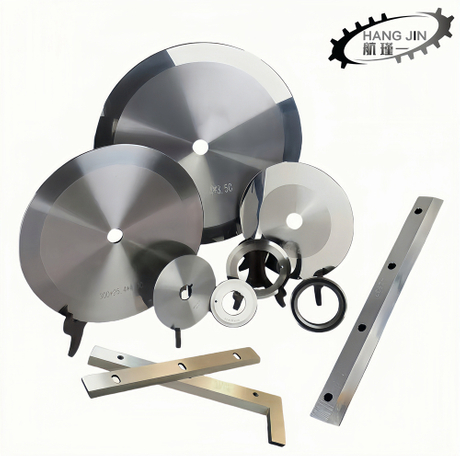
When comparing Circular Saw Blades for Metal, performance is not just about how fast a blade cuts. It also includes precision, stability, and how well the blade adapts to different metal materials. In real applications, these factors often interact, and improving one may affect another. Understanding these trade-offs helps users select the right blade for their specific cutting needs.
Cutting speed and precision often move in opposite directions. Faster cutting usually increases productivity, but it can reduce edge quality. On the other hand, slower cutting speeds tend to produce smoother, cleaner edges.
Key trade-offs to consider
High cutting speed improves throughput but may increase burr formation.
Precision cutting reduces post-processing but may lower efficiency.
Blade material plays a major role in balancing these two factors.
How blade design influences results
Fewer teeth → faster cutting but rougher edges.
More teeth → smoother cuts but slower feed rates.
Carbide blades maintain precision longer due to higher hardness.
| Factor | High Speed Focus | Precision Focus |
|---|---|---|
| Cutting Speed | Fast | Moderate |
| Edge Quality | Lower | High |
| Tool Wear | Faster | Slower |
| Ideal Use | Bulk cutting | Fine finishing |
Cutting stability is critical for consistent results. Even a high-quality blade will underperform if vibration or misalignment occurs. Stability directly affects efficiency, because unstable cutting leads to defects, rework, and downtime.
Factors that influence stability
Blade rigidity and thickness.
Machine alignment and spindle condition.
Proper feed rate and cutting pressure.
Why stability improves efficiency
Reduces vibration and noise during operation.
Maintains consistent cutting paths across long runs.
Minimizes blade wear caused by uneven stress.
Different metals behave differently during cutting. A blade that performs well on aluminum may not deliver the same results on stainless steel. That is why material compatibility is a key part of performance evaluation.
How material properties affect cutting
Soft metals (like aluminum) require sharper edges and higher speeds.
Hard metals (like stainless steel) demand stronger, wear-resistant blades.
Thicker materials increase cutting resistance and heat generation.
Matching blade type to application
HSS blades work well for general-purpose metal cutting.
Carbide blades perform better on hard or abrasive materials.
Thin blades are ideal for sheet metal and precision cuts.
| Metal Type | Recommended Blade Type | Expected Result |
|---|---|---|
| Aluminum | HSS / Thin Slitting Blade | Fast cutting, smooth finish |
| Mild Steel | HSS / Carbide | Balanced performance |
| Stainless Steel | Carbide | High precision, longer blade life |
| Thin Sheet Metal | Thin Slitting Blade | Clean edges, minimal waste |
Choosing the right blade for the material reduces wear and improves overall efficiency. It also helps avoid issues like overheating, rough edges, or excessive tool replacement.
When we talk about Circular Saw Blades for Metal, durability is not just about how long a blade lasts. It also reflects how stable the blade performs over time. In real cutting environments, lifespan depends on wear resistance, heat control, and how often the blade needs maintenance. These factors are closely linked, and they directly influence productivity and cost.
Wear resistance determines how quickly a blade loses its cutting ability. In most cases, carbide blades last longer than HSS blades because they are harder and more resistant to abrasion. However, edge retention is not only about material. It also depends on cutting conditions and usage habits.
Why carbide blades often last longer
They resist abrasion from hard metals more effectively.
Their edges stay sharper during extended cutting cycles.
They perform better in high-speed or high-volume operations.
How edge sharpness affects cutting quality
A sharp edge produces cleaner cuts and reduces burr formation.
Dull edges increase friction, which leads to heat buildup.
Poor edge retention can cause uneven cutting and material waste.
Heat plays a critical role in blade durability. During metal cutting, friction generates high temperatures. If the blade cannot handle this heat, it may lose hardness or even deform. That directly affects both cutting quality and lifespan.
How heat impacts blade performance
Excessive heat accelerates edge wear and dulling.
It can cause blade warping, leading to unstable cuts.
Heat buildup increases the risk of surface damage on the material.
Why material stability matters
Carbide materials maintain hardness at higher temperatures.
HSS blades offer good thermal resistance for moderate workloads.
Stable materials help maintain consistent cutting accuracy.
Durability also connects directly to maintenance and cost. A blade may be cheaper at the beginning, but frequent replacement can increase total expenses over time. That is why many buyers evaluate blades based on long-term performance rather than initial price.
Understanding blade replacement cycles
HSS blades may require more frequent sharpening or replacement.
Carbide blades last longer but have higher initial cost.
Maintenance frequency affects machine downtime and productivity.
Cost vs lifespan trade-offs
Lower-cost blades reduce upfront investment but increase maintenance.
High-durability blades reduce downtime and improve efficiency.
The best choice depends on production volume and cutting conditions.
Practical cost considerations
Labor cost during blade replacement.
Production loss caused by downtime.
Long-term return on investment from durable blades.
In many real-world applications, selecting the right blade is not about choosing the cheapest option. It is about finding a balance between durability, maintenance needs, and overall operational efficiency.
Different metals create different cutting conditions. Thin sheet metal is easier to cut but requires precision. Thick metal increases resistance and heat, which puts more stress on the blade. If the blade does not match the material, it will wear faster and reduce cutting quality.
How metal type affects blade choice
Soft metals like aluminum allow faster cutting speeds.
Hard metals like stainless steel demand stronger, wear-resistant blades.
Mixed materials require a more versatile blade option.
Thickness also changes the cutting approach
Thin sheets need sharp, thin blades for clean edges.
Thick sections require stronger blades to maintain stability.
Improper matching can lead to vibration or overheating.
Blade performance depends heavily on machine compatibility. Even a high-quality blade will underperform if it does not fit correctly. Small mismatches can create vibration, reduce accuracy, and increase wear.
What to check before selecting a blade
Blade diameter must match machine requirements.
Bore size should fit tightly to avoid movement.
Blade thickness affects rigidity during cutting.
Why machine matching matters
It improves cutting stability and reduces vibration.
It ensures consistent cutting depth and accuracy.
It helps extend blade life by reducing mechanical stress.
Cost is always a factor, but it should not be the only one. A lower-cost blade may seem attractive, yet frequent replacement can increase overall expenses. A higher-quality blade often delivers better long-term value.
How to think about cost
Initial price is only part of the total cost.
Maintenance, downtime, and replacement cycles matter more.
A durable blade can reduce production interruptions.
When different blade types make sense
HSS blades are suitable for moderate workloads and budget control.
Carbide blades are better for high-volume or precision cutting.
Long-term operations benefit more from durable solutions.
What affects long-term ROI
Cutting frequency and workload intensity.
Required precision level and surface quality.
Maintenance intervals and labor cost.
Instead of focusing only on price, it is better to evaluate how the blade performs over time. That approach usually leads to better productivity and fewer unexpected issues.
Overall Selection Guide for Circular Saw Blades for Metal
| Selection Factor | HSS Blade | Tungsten Carbide Blade | Best Use Case |
|---|---|---|---|
| Material Suitability | General metals | Hard and abrasive metals | Depends on metal hardness |
| Cutting Performance | Stable and balanced | High precision and consistency | Precision vs general cutting |
| Durability | Moderate | Excellent | High-load vs standard use |
| Maintenance Frequency | More frequent | Less frequent | Maintenance capacity consideration |
| Cost Efficiency | Lower upfront, higher long-term | Higher upfront, better long-term | Budget vs productivity focus |
This guide compares Circular Saw Blades for Metal in performance and durability. It shows how material, stability, and cost affect results. Hangjin offers reliable HSS and carbide blades, delivering precision, longer life, and flexible solutions for industrial metal cutting needs.
A: Circular Saw Blades for Metal cut steel, aluminum, and other metals in industrial or workshop tasks.
A: Circular Saw Blades for Metal use HSS or carbide, affecting durability, precision, and cutting performance.
A: Circular Saw Blades for Metal with carbide last longer and handle harder materials with better precision.
A: Circular Saw Blades for Metal should match metal type, thickness, and machine specifications.
A: Circular Saw Blades for Metal vary in price, but durable blades reduce long-term cost.


