
T: +86-186-8927-7942
E: kemp@hangjin-machinery.com
E: kemp@hangjin-machinery.com
No. 107 Changning Road, Tongjing Town, Jiangning District, Nanjing, Jiangsu, China
Views: 0 Author: Site Editor Publish Time: 2026-08-13 Origin: Site


Industrial cutting processes frequently act as the primary bottleneck in manufacturing and packaging facilities. When a blade fails, the entire production line stops. This mechanical failure directly causes unexpected downtime, spikes in machine motor wear, and immediate lost revenue. Plant managers and procurement teams face a constant operational dilemma. You can settle for the frequent replacement cycles of off-the-shelf OEM blades, or you can justify the upfront engineering time required for custom tooling. Deciding between standard vs custom machine knives requires looking past basic unit price comparisons. You must evaluate material science, edge geometry, and your specific production environment variables. This guide breaks down how to assess your cutting applications and determine which blade strategy maximizes your operational efficiency.
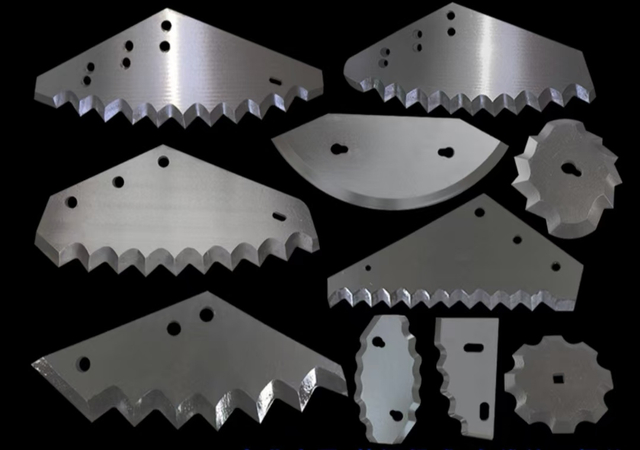
Standardization equals speed: Standard and OEM knives provide immediate availability and predictable baseline costs, making them suitable for common applications and standard machinery.
Customization drives ROI: Custom machine knives lower long-term expenses by utilizing application-specific metallurgy, optimized edge geometries, and specialized heat treatments to extend wear life and reduce machine load.
Downtime dictates the decision: The primary metric for choosing custom over standard is the hourly cost of machine downtime required for blade changeovers.
The Hybrid Approach: Most facilities benefit from a mixed inventory—relying on standard knives for routine cuts and deploying custom knives specifically for bottleneck operations.
Supplier vetting is critical: Transitioning to custom blades introduces lead-time and engineering risks, requiring a manufacturing partner with proven prototyping, direct engineering support, and strict tolerance controls.
Table of Contents
Standard machine knives represent the default cutting tools supplied with new machinery or sold through large industrial catalogs. These include OEM replacements and mass-produced factory knives. Manufacturers design these blades for broad, average use cases rather than peak performance in specific applications. Typical materials include standard carbon steels like 1095 or basic stainless alloys like 440C. These metals offer acceptable performance across a wide range of non-demanding tasks. Edge geometries remain generalized. A standard 30-degree bevel is common because it provides a durable edge that resists immediate chipping, even if it lacks the slicing efficiency of a keener angle.
Factories produce standard blades using high-volume manufacturing methods. Stamping and basic laser cutting keep unit costs incredibly low. However, these aggressive production techniques often introduce micro-imperfections. Stamping shears the metal, creating microscopic fractures along the edge. Laser cutting leaves a heat-affected zone that can alter the steel's hardness near the cutting surface. These manufacturing realities mean the blade starts with a slightly compromised edge before it even enters your facility.
When you pull a standard blade from a catalog, you accept a generic surface finish. Mass-produced blades rarely undergo secondary grinding or polishing operations. The microscopic striations left by the primary grinding wheel create friction points. As the blade passes through dense substrates like thick rubber or multi-wall corrugated board, these friction points generate heat. Heat degrades the temper of the steel, leading to rapid edge rolling. Standard blades often exhibit slight dimensional runout. A variance of just a few thousandths of an inch might seem negligible, but at 3,000 RPM, that runout translates to vibration, poor cut quality, and accelerated bearing wear on the machine spindle.
Standard knives work perfectly in specific operational scenarios. Low-volume production runs rarely stress a blade enough to warrant custom engineering. If a machine only runs for a few hours a week, a basic carbon steel blade will likely last for months. Non-abrasive materials like standard copy paper, soft plastics, or basic textiles cut easily without requiring advanced metallurgy. Standard blades also excel in legacy machinery where the original OEM specifications perfectly align with your current operational needs.
The primary advantage of standard knives is immediate procurement. You face zero engineering lead time. When a blade breaks, you pull a replacement from the tool crib or order one for next-day delivery. Inventory management remains simple for non-critical cutting stations. Standard blades also make sense for training environments. New operators might accidentally crash a machine or misalign a material feed. Destroying a cheap standard blade during a training error is far less painful than ruining a highly engineered custom tool.
Consider a facility running a secondary packaging line that only operates during peak seasonal shifts. The machine cuts standard low-density polyethylene (LDPE) shrink film. The material is clean, non-abrasive, and the line speed is moderate. In this scenario, a standard OEM replacement blade is the correct choice. The operational demands do not justify the engineering hours required to design a custom profile. You simply need a sharp edge available on demand.
Relying exclusively on off-the-shelf blades introduces hidden operational burdens. Frequent changeovers drain maintenance labor hours. Every time a blade needs replacing, technicians must lock out the machine, remove safety guards, unbolt housings, and install the new knife. They must then tram the blade, adjust clearances, and run test cuts. This process can easily consume 45 minutes. If an abrasive material forces you to change standard blades twice a shift, you lose hours of production capacity daily.
Edge retention remains highly inconsistent in high-stress applications. Standard blades dull rapidly when cutting dense or abrasive substrates. Relying solely on a single OEM or machine builder creates distinct supply chain vulnerabilities. Proprietary standard blades often carry inflated original brand markups. You end up paying a premium for strictly average performance simply because the blade has the machine builder's logo stamped on it.
When a standard blade begins to fail, it rarely happens uniformly. You will notice localized dulling where the material flow is heaviest. Operators often attempt to compensate by increasing the cutting pressure or adjusting the anvil cylinder. This temporary fix forces the machine to work harder, spiking the electrical amp draw on the drive motor. Over time, this increased load leads to premature motor failure and blown drives. The cheap standard blade ends up causing a massive mechanical breakdown.
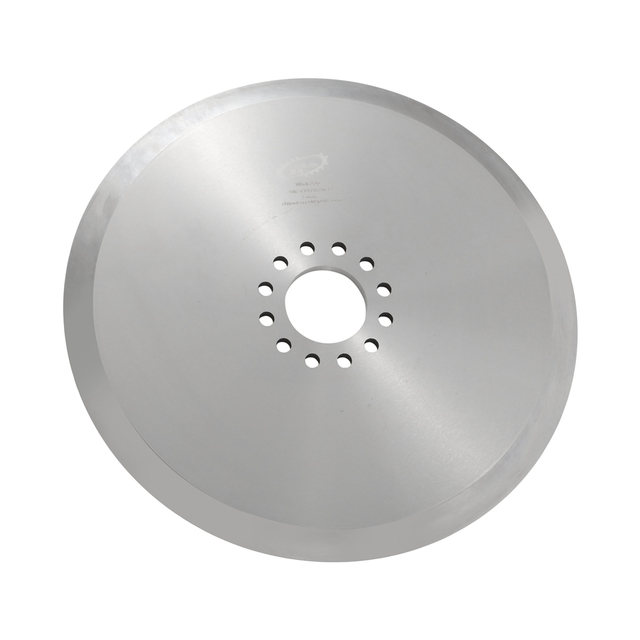
Custom manufacturing unlocks the power of advanced metallurgy. Engineers select materials tailored specifically to the substrate you process. D2 tool steel offers exceptional wear resistance for heavy packaging applications. M2 High-Speed Steel handles elevated temperatures without losing its temper, making it ideal for high-friction environments. Tungsten Carbide provides extreme longevity for highly abrasive materials like recycled corrugated board, fiberglass, or rubber. Powder metallurgy steels offer incredibly uniform grain structures, eliminating the weak points found in standard cast alloys.
Custom edge profiles matter just as much as the steel selection. Engineering thinner profiles creates keener edges. A custom 15-degree hollow grind slices cleanly through stretch film without crushing or tearing the material. This reduced cutting friction directly lowers the electrical draw on the machine's motor. Specialized heat treatments further enhance blade durability. Cryogenic tempering drops the steel to sub-zero temperatures, transforming retained austenite into harder martensite. Localized edge hardening allows the cutting surface to achieve maximum hardness while the core of the blade remains flexible enough to absorb impact shocks.
Beyond the primary bevel, engineers can design compound angles. A compound angle features a durable primary bevel for impact resistance, backed by a secondary relief angle that reduces surface friction as the blade passes through the substrate. This geometry is highly effective in thick rubber or foam cutting, where material binding is a constant issue. The relief angle prevents the substrate from pinching the blade, keeping the operating temperature low and preventing the material from melting onto the cutting edge.
Industrial Blade Material Selection Guide
Alloy Type | Primary Characteristics | Ideal Industrial Applications |
|---|---|---|
D2 Tool Steel | High carbon, high chrome. Excellent wear resistance and moderate toughness. | Heavy packaging, thick plastics, general paper converting. |
M2 High-Speed Steel | Retains hardness at elevated temperatures. Resists thermal degradation. | High-speed slitting, friction-heavy continuous cutting. |
Tungsten Carbide | Extreme hardness and abrasion resistance. Brittle under heavy impact. | Recycled corrugated board, fiberglass, abrasive films. |
CPM 10V (Powder Metal) | Uniform grain structure. Exceptional edge retention without the brittleness of carbide. | High-volume continuous manufacturing, dense composites. |
Certain operational trigger points justify the investment in custom manufacturing. Processing highly abrasive or novel materials destroys standard blades rapidly. Recycled cardboard, for example, contains embedded silica and glass fragments that chew through basic carbon steel in hours. Modifying machinery for higher throughput also demands stronger cutting tools. When you increase line speeds, friction increases exponentially. Standard blades overheat and warp under these conditions.
Unacceptable failure rates with standard blades serve as a clear signal for an upgrade. If you experience constant edge rolling, chipping, or snapping, the standard tool is failing the application. Custom manufacturing also rescues older equipment. Reverse-engineering obsolete OEM blades keeps reliable legacy machinery operational. Engineers can take a worn blade from a discontinued machine, map its dimensions, and machine a replacement using modern alloys. Often, the new custom blade performs far above the original factory specifications.
The reverse engineering workflow requires precision measurement. A custom manufacturer will use optical comparators and coordinate measuring machines (CMM) to map the exact geometry of your worn blade. They account for the wear patterns to understand exactly how the blade interacts with the substrate. From there, they generate a new CAD model, often thickening the spine for rigidity or altering the mounting slots to allow for easier tramming during installation. You get a blade that fits your old machine perfectly but cuts like a modern, high-performance tool.
Custom ordering involves undeniable logistical realities. You must account for initial CAD design and engineering time. Engineers need time to analyze your failed blades, understand your machine kinematics, and draft new blueprints. Prototyping phases add weeks to the timeline. You cannot simply order a custom blade and expect it tomorrow. Initial lead times stretch significantly longer than buying from a catalog.
Strategic planning easily mitigates these initial delays. The long lead time only applies to the very first order. Once the manufacturer finalizes the design and proves the prototype works, production accelerates. Blanket orders ensure a steady supply of custom blades. Stocking programs allow the manufacturer to hold your finished blades on their shelves, shipping them the moment you release an order. Predictive inventory management eliminates wait times for all subsequent deliveries.
During the prototyping phase, expect to test several iterations. The first prototype might feature an aggressive compound bevel that cuts beautifully but chips after 10,000 cycles. The engineers will take that data, adjust the heat treatment to increase core toughness, and send a second prototype. This iterative process requires patience from your production team. You are developing a permanent mechanical solution to a production bottleneck.
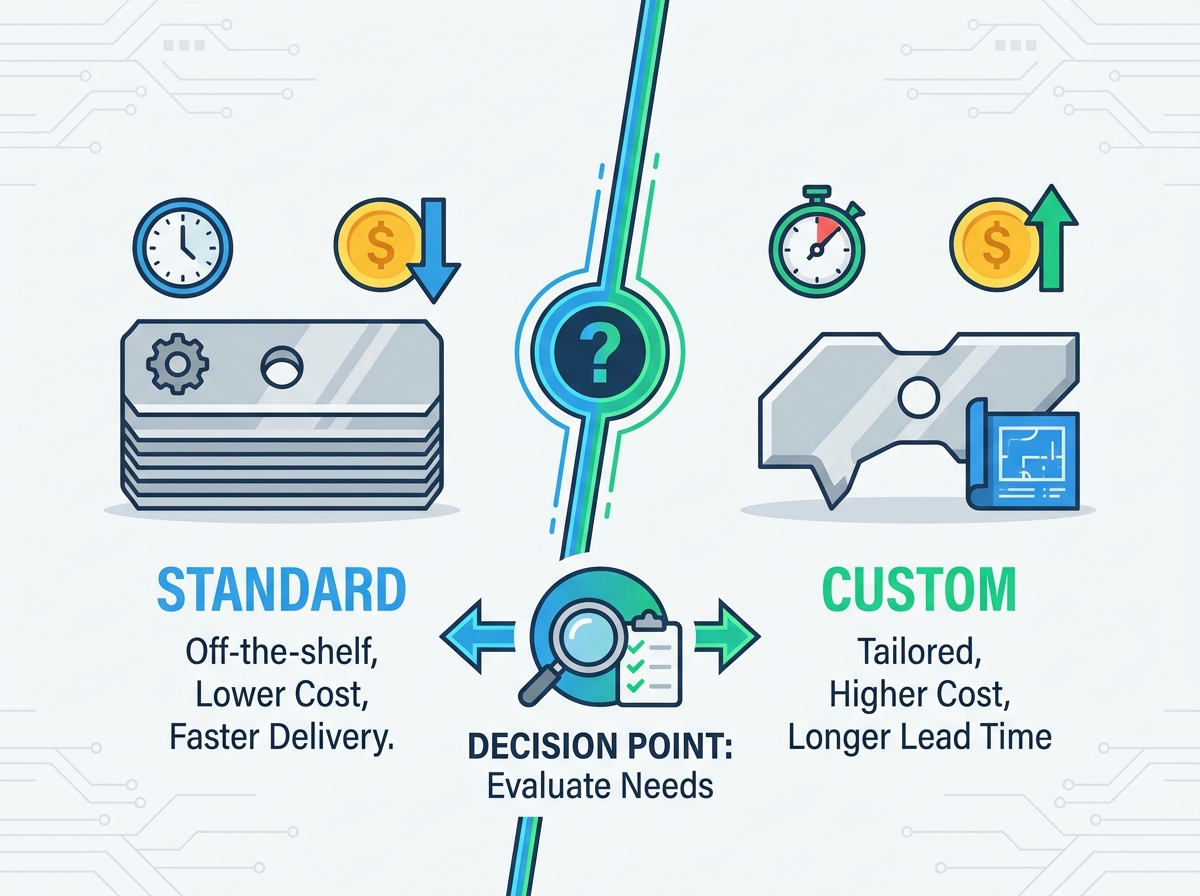
When evaluating standard vs custom machine knives, you must calculate the true operational expense over the life of the tool. A low initial purchase price often masks a high operational cost. To understand the real value, you must track several metrics. Record the exact unit price of the blade. Calculate the lost revenue per minute of machine downtime. Add the hourly wage of the maintenance technician performing the swap. Finally, divide that total sum by the number of successful cuts the blade achieves.
Standard knives offer an attractive initial purchase price. However, if they require weekly changes, the accumulated downtime costs destroy your profit margins. Custom knives deliver high long-term value. They generate massive operational savings by staying in the machine longer. A premium custom blade might require a larger upfront investment, but if it lasts ten times longer, the overall operational expenditure drops dramatically.
Let us break down the calculation framework for long-term operational expenses. You need hard data from your production floor.
Document the exact time it takes to perform a complete blade changeover, from lockout/tagout to the first successful production cut.
Multiply that time by your facility's hourly downtime cost (including lost production revenue and overhead).
Add the labor rate of the maintenance technicians performing the work.
Add the purchase price of the blade.
Divide this total figure by the total number of linear feet or individual units cut before the blade fails.
When you run this formula, the cheap standard blade almost always costs more per cut than the engineered custom blade.
Standard knives frequently bottleneck high-speed production lines. They dull rapidly under increased friction. As the edge degrades, cut quality drops. Operators must then slow the machine down to compensate for the failing blade. This throttles your entire facility's output. You cannot scale production if your cutting tools cannot handle the speed.
Custom knives scale directly with your production goals. Engineers design them to withstand intense heat at higher RPMs and faster cycle times. The advanced metallurgy dissipates heat efficiently. The optimized edge geometry reduces drag. Performance remains consistent from the first shift on Monday to the last shift on Friday. You maintain peak line speeds without sacrificing cut quality or generating excessive scrap material.
Scrap reduction is a major factor in performance consistency. When a standard blade dulls, it stops shearing and starts tearing. In a paper converting operation, this creates excessive dust. That dust clogs sensors, jams bearings, and contaminates the final product. In plastic film slitting, a dull blade stretches the material before cutting it, resulting in deformed edges that fail quality control. Custom blades maintain their edge integrity, ensuring clean, precise cuts that keep your scrap bins empty and your yield rates high.
Mass-produced factory knives carry acceptable tolerance variations. One blade might be slightly thicker than the next. The mounting holes might be off by a fraction of a millimeter. These slight differences force operators to adjust the machine during every single changeover. They must use shims, adjust set screws, and run multiple test cuts to dial in the new blade.
Custom manufacturing utilizes CNC grinding and Wire Electrical Discharge Machining (EDM). Wire EDM cuts steel with electrical sparks, leaving zero heat-affected zone. It holds tolerances to a ten-thousandth of an inch. When a blade is machined this precisely, it drops right onto the mounting pins. Tighter tolerances lead to drastically faster machine setup times. You eliminate the need for manual calibration. The blade simply fits perfectly every time.
Consider a multi-blade slitter shaft used in flexible packaging. If you install ten standard blades, the slight thickness variations compound across the shaft. By the time you reach the tenth blade, the cumulative error might throw your cut widths entirely out of specification. Custom blades manufactured with ultra-tight tolerances eliminate this cumulative error. You can stack them on a shaft knowing the final dimensions will be exactly as engineered. This precision reduces the burden on your maintenance team and guarantees product consistency. Tight tolerances prevent material dust from packing into microscopic gaps between the blade and the holder, which often causes standard blades to bind and jam.
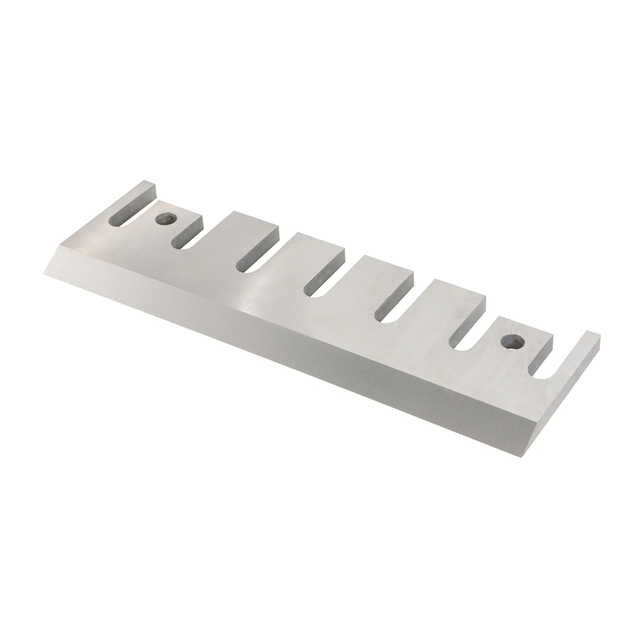
Most facilities do not need custom blades for every single machine on the floor. A strategic allocation approach works best. Use standard knives for routine, low-stress cutting tasks. If a machine cuts standard paper at low speeds, keep using the cheap OEM blades. This controls your baseline tooling costs for 80 to 90 percent of your operations.
Deploy custom machine knives strictly for the remaining 10 to 20 percent of your applications. Target the machines that act as production bottlenecks. Focus on the lines processing highly abrasive materials or running at maximum capacity. By isolating your custom tooling budget to the most demanding applications, you maximize your return on investment while keeping general maintenance costs low.
Operational Comparison of Industrial Cutting Tools
Feature | Standard/OEM Blades | Custom Engineered Blades |
|---|---|---|
Material Selection | Basic carbon steel, standard stainless (1095, 440C) | Advanced alloys (D2, M2, Tungsten Carbide, Powder Metals) |
Edge Geometry | Generalized angles (typically 30-degree bevels) | Application-specific (hollow grinds, compound angles) |
Procurement Lead Time | Immediate (off-the-shelf) | 4-8 weeks initially (drops with stocking programs) |
Machine Setup Time | Variable (often requires shimming and calibration) | Minimal (ultra-tight tolerances ensure drop-in fit) |
Best Suited For... | Low-volume, non-abrasive, routine cutting tasks | High-speed, highly abrasive, bottleneck operations |
Switching blade types carries inherent operational risk. A poorly designed custom blade can cause just as much downtime as a failing standard blade. A mitigated adoption process protects your production schedule. Start with a thorough engineering audit of your failed standard blades. Do not just throw them in the scrap bin. Examine them under magnification. Chipping indicates the steel is too hard for the impact load. Edge rolling means the steel is too soft. Uneven wear points to machine alignment issues.
Provide this failure data to your custom manufacturer. Move to small-batch prototyping next. Never replace every blade in the facility at once. Run controlled A/B testing on a single machine. Install the custom prototype and track its performance against a machine running the standard blade. Measure cut quality, motor amp draw, and total cuts before failure. Only roll out the new blades facility-wide after the prototype proves its value.
To execute a proper A/B test, isolate as many variables as possible. Run the exact same substrate through both machines. Ensure the operators run the machines at identical line speeds. Have your maintenance team log the amp draw on the main drive motors at the start of the shift and at the end of the shift. A custom blade with an optimized edge geometry will show a noticeably lower and more consistent amp draw over time, proving that it is reducing the mechanical strain on your equipment.
Custom blades, especially those made from Tungsten Carbide, require different handling procedures than standard steel blades. Carbide is incredibly hard but brittle. If a maintenance technician drops a carbide-tipped blade on a concrete floor, it will shatter. You must train your staff on proper handling, storage, and installation techniques. Implement strict torque specifications for mounting bolts. Over-tightening a custom blade can warp the profile, negating the ultra-tight tolerances achieved during the CNC machining process. Use torque wrenches and follow the manufacturer's exact mounting sequence to ensure the blade seats perfectly against the anvil or backing plate.
Not all blade suppliers possess the necessary engineering capabilities. Many are simply distributors masking as manufacturers. Evaluate potential partners rigorously. Look for in-house heat treatment capabilities. If a supplier outsources heat treatment, they lose direct control over the most critical phase of blade manufacturing. In-house vacuum furnaces ensure the steel reaches the exact hardness required.
Demand strict material traceability. You need mill certificates to prove the D2 steel you ordered is actually D2 steel. Ensure the manufacturer holds relevant ISO certifications for quality management. They must also be willing to sign Non-Disclosure Agreements (NDAs) to protect your proprietary cutting processes. Direct engineer-to-engineer communication is required. A true custom manufacturer takes a consultative, problem-solving approach. Catalog suppliers simply process transactions.
When interviewing a potential custom blade manufacturer, ask specific technical questions.
Do you perform all CNC grinding and Wire EDM machining in-house?
Can you provide metallurgical analysis on our current failed blades?
What is your standard protocol for handling prototype revisions if the first design fails?
Do you offer vendor-managed inventory or blanket order stocking programs to reduce lead times after the initial design phase?
If the supplier hesitates or gives vague answers, find a different manufacturing partner. You need a company that understands industrial kinematics, not just metal fabrication.
Take the following immediate steps to optimize your industrial cutting operations and eliminate production bottlenecks:
Collect five worn blades from your most problematic machine and examine the cutting edges under magnification to identify specific failure modes like chipping or rolling.
Calculate your exact hourly downtime cost for blade changeovers, factoring in lost production revenue and maintenance labor rates.
Request a direct engineering consultation with a specialized industrial knife manufacturer to explore material upgrades like Tungsten Carbide or M2 High-Speed Steel.
Implement a small-scale A/B test on a single bottleneck machine using a prototype custom blade before committing to a facility-wide rollout.
Partnering with an established manufacturing leader can greatly streamline this transition. Leveraging decades of precision engineering expertise and state-of-the-art CNC production facilities, Hangjin delivers custom industrial cutting solutions engineered to maximize wear life, eliminate costly operational downtime, and elevate your facility's long-term profitability.
A: Custom knives carry higher upfront engineering and unit costs. However, they typically cost significantly less per cut over their total lifespan. The extended durability and drastic reduction in machine downtime quickly offset the initial investment, making them more economical for high-volume operations.
A: Initial prototyping and production usually require four to eight weeks to account for CAD design and custom machining. Once the design is finalized, timelines drop significantly. Manufacturers use stocking programs and blanket orders to reduce reorder lead times to zero.
A: Yes. Manufacturers use reverse-engineering processes on worn blades or old schematics. Modern CNC machining allows engineers to recreate and often improve upon the original OEM specifications, keeping legacy machinery running efficiently without needing to upgrade the entire production line.
A: Industry standards for extreme wear include Tungsten Carbide, CPM 10V, and M2 High-Speed Steel. The final material selection depends entirely on the specific substrate being processed, the machine's operating speed, and the required impact resistance.
A: OEM knives are built for average use cases to keep initial machine purchase costs down. Aftermarket custom knives are engineered specifically to outperform the OEM baseline in targeted, high-stress applications by using superior metallurgy and optimized edge geometries.
A: Look for signs of poor cutting performance with standard blades. Material crushing, tearing, excessive dust generation, rapid edge rolling, or increased electrical draw from the machine's motor all indicate that the current edge geometry is failing the application.


